-400x299.png&w=1080&q=75&dpl=dpl_Hi6ZKV3Miso167J9igyQX1ihqdht)
How Quickly Do Energy-Efficient Windows Pay for Themselves in Phoenix?
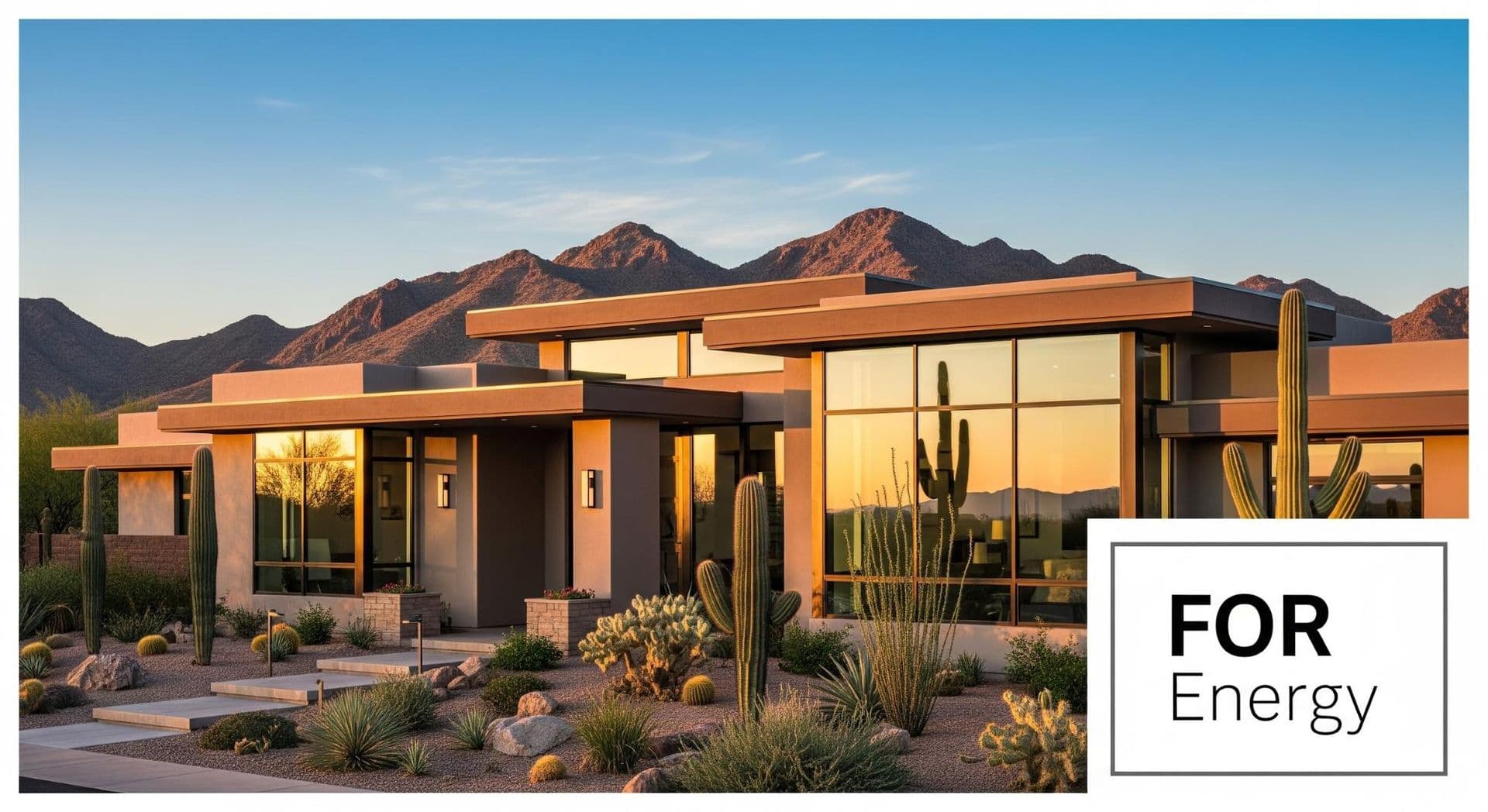
Key Takeaways
Energy-efficient windows in Phoenix can pay for themselves faster due to extreme cooling demands.
Payback period varies based on window type, ratings (U-factor, SHGC, Low-E), installation quality, and home energy use.
Beyond financial savings, benefits include enhanced home comfort, reduced HVAC strain, and increased property value.
A professional, localized home energy checkup can provide precise savings and payback estimates for your specific Phoenix home.
The Phoenix Heat Factor: Why Your Windows Matter Most
Living in the Valley of the Sun means embracing the sunshine, but it also means battling relentless summer heat. For Phoenix homeowners, the question isn't if the air conditioner will run, but for how many hours, days, and months. This constant demand for cooling makes our homes incredibly sensitive to energy loss, and one of the biggest culprits is often overlooked: your windows.
Unlike in milder climates, windows in the Phoenix metro area are on the front lines of a daily thermal battle. Intense solar radiation bombards your glass, leading to significant solar heat gain—the primary driver of high indoor temperatures and staggering electricity bills. Older, inefficient windows, particularly single-pane or builder-grade models with worn seals, act like thermal holes, allowing precious cool air to escape and superheated outdoor air to infiltrate. This is a key reason homes lose most of their energy through windows and poor insulation.
Because cooling accounts for such a large portion of a typical household's energy budget here, upgrading to energy-efficient windows delivers a much more dramatic and immediate impact. The potential for substantial energy savings means the window payback period is often significantly shorter in Phoenix than in cooler parts of the country.
Understanding Your Window Investment: Key Payback Factors
Calculating exactly how quickly energy-efficient windows pay for themselves through savings isn't a one-size-fits-all equation. The return on your investment (ROI) depends on a combination of interconnected factors, from the technology in the glass to the quality of the installation. Understanding these variables will help you see the complete picture of your potential savings.
Window Performance Metrics: U-Factor, SHGC, and Low-E Coatings
When shopping for windows, you'll encounter several key performance ratings. For Phoenix, two are particularly critical. A brief overview of what these Energy Star ratings mean is essential.
Solar Heat Gain Coefficient (SHGC): This is the most important number for Arizona homeowners. SHGC measures how much solar radiation is transmitted through a window, expressed as a number between 0 and 1. The lower the SHGC, the less solar heat the window lets in. In our climate, you want the lowest SHGC possible to keep your home cooler and reduce your AC's workload.
U-Factor: This rating measures how well a window prevents non-solar heat from escaping or entering. It’s essentially an indicator of insulation value. A lower U-factor means better insulation. While crucial in cold climates, it’s still important here for keeping the summer heat out.
Low-E Coatings: Short for low-emissivity, these are microscopically thin, transparent coatings that reflect heat. Modern Low-E windows are designed to reflect infrared heat (the kind you feel) while allowing visible light to pass through, keeping your home bright but not hot. You can learn more about how energy-efficient windows work to block this specific type of heat.
Window Type and Material: From Vinyl to Fiberglass
The initial cost and long-term performance of your windows are also influenced by their physical construction. Modern frames made from materials like vinyl, composite, or fiberglass offer superior insulation compared to older aluminum frames, which readily conduct heat. The number of glass panes (double or triple-glazing) and the gas fill between them (like argon) also contribute to better thermal insulation. The right combination of frame and glass technology is central to any effective window replacement strategy.
The Critical Role of Quality Installation
You can invest in the highest-rated, most expensive windows on the market, but if they aren't installed correctly, you'll never achieve the advertised energy savings. A proper installation ensures an airtight seal, eliminating drafts and preventing air leakage around the frame. This step is non-negotiable for maximizing your ROI. A professional installer will ensure the window is perfectly plumb, level, and sealed, guaranteeing that its performance metrics translate into real-world savings and comfort.
Calculating Your Payback: Realistic Scenarios for Phoenix Homeowners
While a precise calculation requires a personalized assessment, we can explore realistic scenarios to help you understand the potential payback period for your investment in new windows.
Assessing Your Current Windows and Energy Usage
The first step is to evaluate your starting point. The older and less efficient your current windows are, the greater your potential savings will be and the faster your payback period. A home with original, single-pane aluminum windows from the 1980s stands to save significantly more than a home with 10-year-old double-pane windows. Look at your past utility bills to establish a baseline for your energy consumption, as this will be the benchmark against which you measure future savings.
Example Payback Scenarios in the Phoenix Metro Area
Let's consider a hypothetical example. A family in a 2,200-square-foot home in Chandler has old, leaky single-pane windows and an average summer electricity bill of $450. After a full Phoenix energy-efficient window replacement with modern, Low-E, double-pane units, they could potentially see a 15-25% reduction in their cooling costs.
Potential Monthly Savings: $67.50 - $112.50
Potential Annual Savings: $810 - $1,350
If the total window investment was $15,000, the simple payback period would be between 11 and 18.5 years. However, this calculation only considers direct energy savings. It doesn't account for rising utility costs (which would shorten the payback period), increased home value, or the immediate improvement in comfort.
Beyond the Payback: Long-Term Benefits of Window Upgrades
Focusing solely on the payback period overlooks the many other valuable benefits that new windows provide from day one. These advantages contribute to a better quality of life and the overall health of your home.
Enhanced Home Comfort and Air Quality
Energy-efficient windows create a more stable and comfortable indoor environment. They eliminate hot spots near windows, reduce drafts, and even dampen outside noise. By creating a tighter building envelope, they also help reduce the amount of dust, pollen, and other allergens that can enter your home, contributing to better indoor air quality. It's one of the most effective tips for a more energy-efficient home.
Reduced Strain on Your HVAC System
When your windows effectively block heat, your air conditioning system doesn't have to work nearly as hard to maintain your desired temperature. This reduced workload not only lowers your energy bills but also extends the lifespan of your expensive HVAC equipment. Less wear and tear can mean fewer costly repairs and a longer period before you need a full system replacement. It's a key part of a whole-home approach that includes services like home insulation to create a truly efficient system.
Increased Home Value and Curb Appeal
New windows are a significant aesthetic upgrade. They boost your home's curb appeal and can be a major selling point for potential buyers. According to the National Association of Realtors, window replacement projects have a consistently high return on investment at resale. Buyers today are savvy about energy efficiency, and a home with modern, high-performance windows is more attractive and valuable on the market.
Your Personalized Payback: The FOR Energy Advantage
Online calculators and hypothetical examples are useful for understanding the potential, but they can't tell you the specific story of your home. The only way to get a truly accurate answer to "how quickly will my new windows pay for themselves?" is with a professional, on-site evaluation.
At FOR Energy, we don't just sell windows; we provide solutions based on a comprehensive understanding of your home's unique performance characteristics. Our process begins with a Free Home Energy Checkup, where our experts assess your existing windows, insulation, and overall energy usage. This data-driven approach allows us to provide a personalized recommendation and a realistic projection of your energy savings and payback period.
Discover Your Home's True Energy Savings Potential
Ready to stop guessing and start saving? Schedule your Free Home Energy Checkup today with FOR Energy to get a personalized assessment of your home's window performance and potential payback in the Phoenix heat.
FAQs
How long do energy-efficient windows typically last in Arizona's climate?
Answer: High-quality energy-efficient windows are built to withstand harsh conditions and can last 20-30 years or more, even with Arizona's intense sun and heat, provided they are properly installed and maintained. Their longevity is key to maximizing long-term ROI.
Are there any rebates or tax credits available for energy-efficient windows in Phoenix?
Answer: While federal tax credits for energy-efficient home improvements can vary and are subject to change, it's always advisable for Phoenix homeowners to check for any current state, local, or utility provider rebates. FOR Energy can help guide you on potential incentives during your home energy checkup.
Do new windows improve home comfort as significantly as they save energy in Phoenix?
Answer: Absolutely. Beyond the financial savings, new energy-efficient windows dramatically improve home comfort by reducing heat transfer, eliminating drafts, and maintaining more consistent indoor temperatures, which is especially critical during Phoenix's intense summer months.
What is the most important rating to look for in energy-efficient windows for Phoenix?
Answer: For Phoenix's hot climate, the most critical rating to consider is the Solar Heat Gain Coefficient (SHGC). This measures how well a window blocks heat from the sun. A lower SHGC is ideal for minimizing unwanted heat gain and significantly reducing cooling costs in Arizona. The U-factor, which measures insulation value, is also important.
Can replacing just a few windows make a noticeable difference in energy bills?
Answer: Yes, even replacing a few of your oldest, least efficient windows, especially those receiving direct sun exposure, can lead to noticeable improvements in energy bills and comfort, particularly in key living areas. A full home energy checkup can identify the highest impact windows.
Schedule Your
Free Home Energy Check Up!
Recent Posts
Superior Heat Resistance: Cellulose insulation has a high density and R-value, creating an exceptional thermal barrier that effectively blocks the intense radiant heat common in Phoenix.

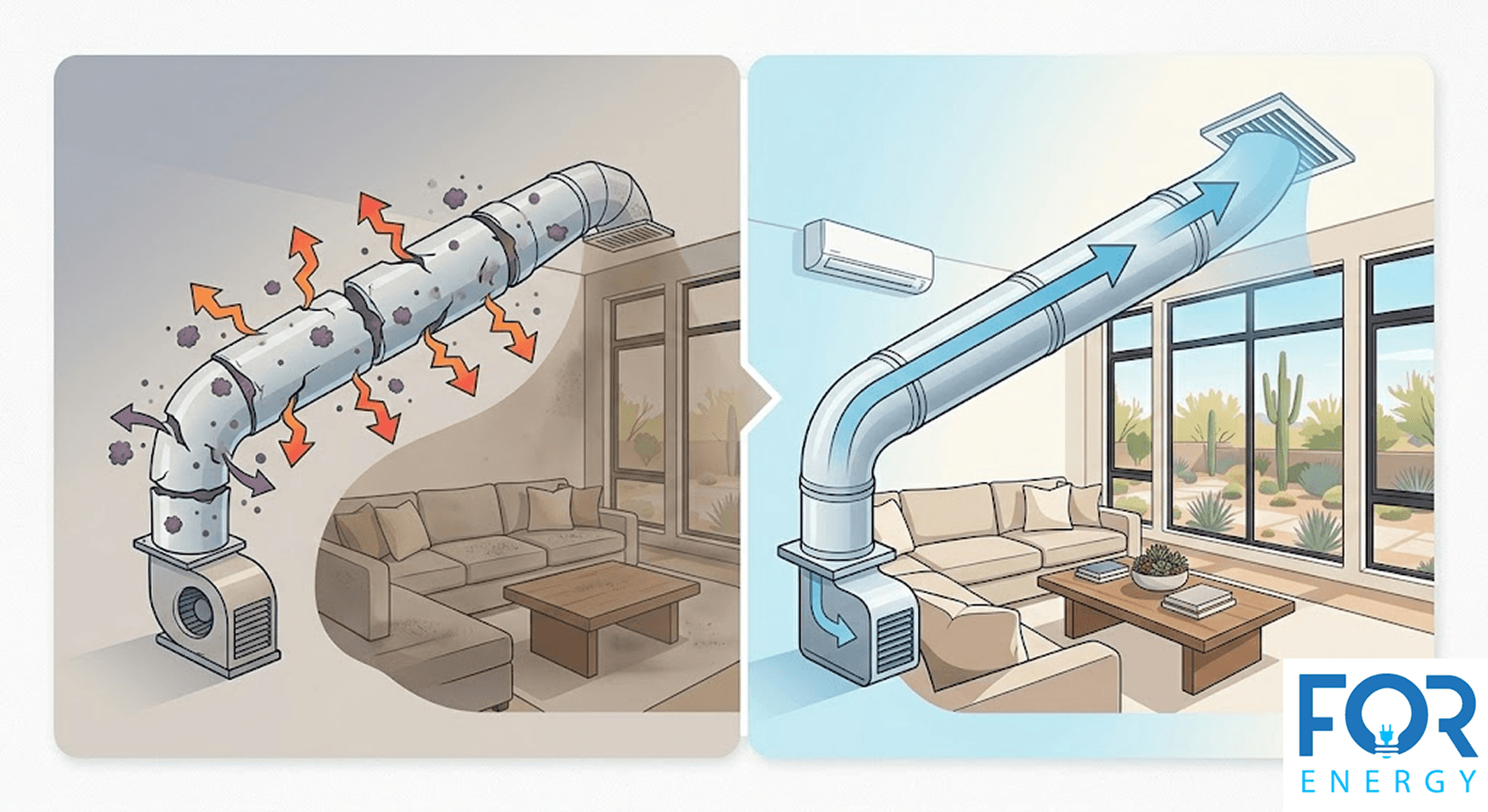
Leaky ducts can account for up to 30% of your home's conditioned air loss, leading to higher energy bills and an overworked HVAC system.
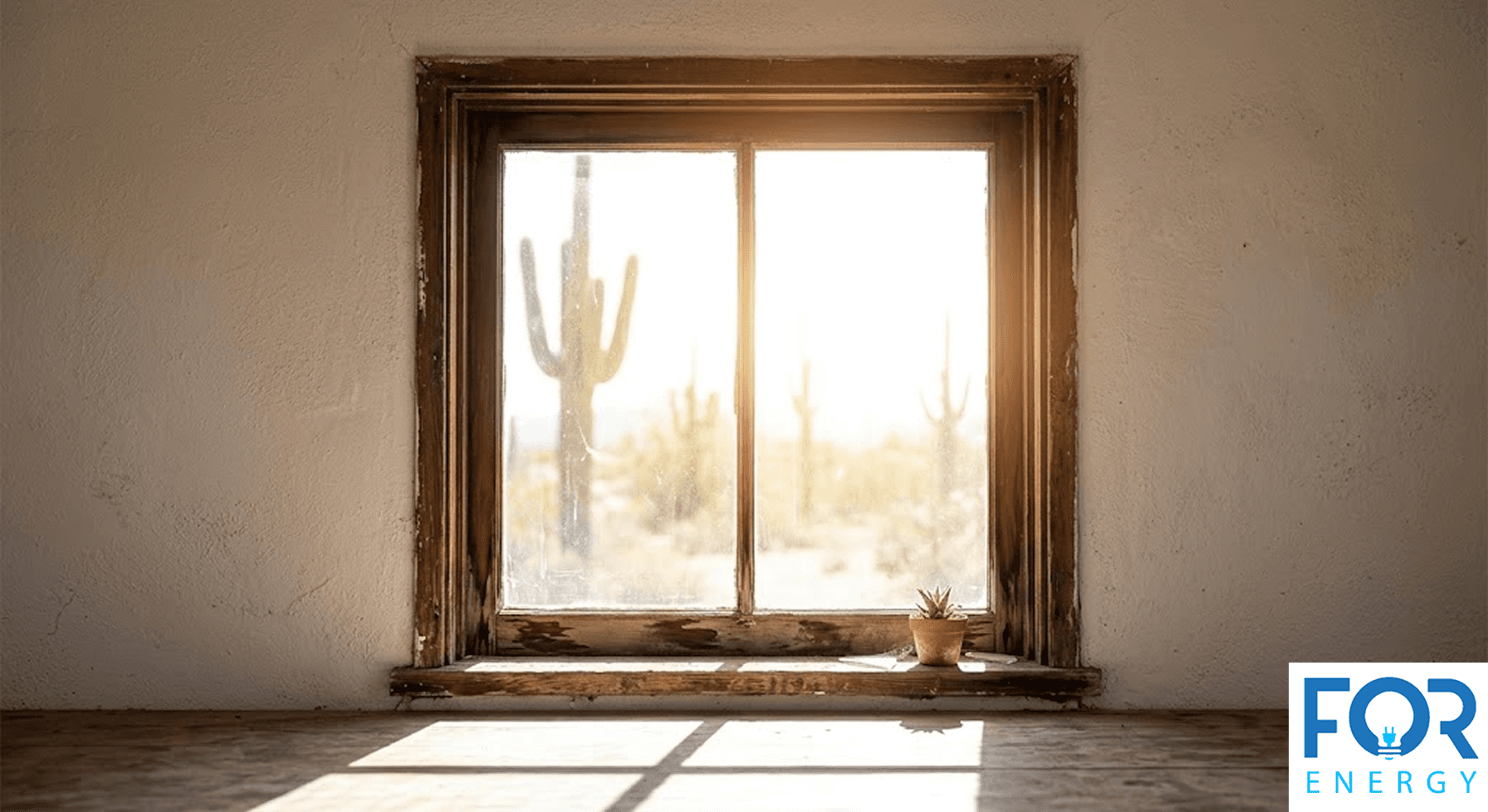
Phoenix Climate Demands Specific Solutions: Standard windows are not built for Arizona's extreme heat. Energy-efficient windows designed for our climate are one of the most effective investments you can make to lower energy bills and improve home comfort.
Featured Customer Review
The whole process with FOR Energy, a local Arizona company, has been a positive experience! Jen was knowledgeable about the pressure check and attic seal, which was the first process, and Tyler performed the check very quickly one evening, which was best for my schedule. I really enjoyed working with Eric on my contract. He was very honest and helped me pick the perfect system for our home. The best part was working with Spencer and Dylan as part of my project management team. They were very informative and responsive to my questions. They helped communicate with the city during the permitting process and kept me up to date with appointments and visits from Titan Solar, APS, and the City of Phoenix muni. I highly recommend FOR Energy! Skip the others, and stay local for your solar needs.
Schedule Your Free Home Energy Checkup With One of Our Experts
We've helped thousands of families get the best value for their money in the past 12 years
Where We Work

Mon-Thu: 8:30 AM- 7:30 PM
Fri: 8:30 AM–5:30 PM
Sat: 9:00 AM–5:30 PM
Sun: Closed