-400x299.png&w=1080&q=75&dpl=dpl_Df9nbijWDZqk7LboESf1kkPpUa81)
When Are Solar Panels Most Efficient
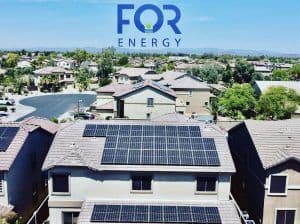
If you’re considering using a solar panel system to power your home, you probably have many questions that you’d like to have answered before you agree to have one installed by a contractor. The more you know, the better! But let’s take a look at one question in particular that virtually every homeowner in the market for solar panels will have at some point: When are they most efficient?
Answering for “where” is a bit simpler than “when.” Solar panels will always be more efficient in sunnier areas, especially those which don’t have many trees or buildings nearby that could block out the sun at some point during the day. But no matter where you live, you can’t plan to have solar panels installed without knowing how several time-related factors will affect them.
Time of Day
While solar panels will absorb any sunlight that hits them throughout the day, they’re at their best when directly exposed to that light—which happens whenever the sun is perfectly positioned to hit them at the angle in which they sit on your roof.
Your solar panels will work best when installed on a slope of your roof that catches the most direct sunlight at any point during a day, which would ideally be from 11 a.m. to 4 p.m.
Time of Year
Depending on where you live, solar panels may be more effective in some seasons than in others. Florida, for example, is known as the “Sunshine State” even though its summer days aren’t always sunny. Because there are so many intense thunderstorms in the area on a regular basis, solar panels are likely to be less effective during a summer there than in a state such as Arizona that’s consistently drier—which means less cloud cover.
If you live in a state where fall and winter comes with sunny skies and not much rain, you may even find your solar panels to be performing at their best then.
Age of Your Roof
While this doesn’t directly affect the way in which your solar panels perform, it will affect your ability to even have them installed at all. If your home’s roof is getting close to the end of its expected lifespan and you know you’ll need to have it replaced in the near future, it’s not a good idea to install a solar panel system without tending to the roof first. After all, you won’t be able to work around your solar panels during a roof replacement—they’ll have to come off, which will make the roof replacement process more of a headache for you than it needs to be.
Consult With the Experts
While you can use all of this information to make an educated guess about whether solar panels are a viable option for your home, the best way to know for sure is to consult with a contractor. Any solar energy company worth their salt will walk you through the world of solar power and develop a plan specifically for your own home to make sure you’re getting the most out of your investment.
The Energy Pros here at FOR Energy will be happy to help you understand everything you want to know about solar panels and get you started on the path to using clean energy at your home. Contact us today to schedule a consultation.
Schedule Your
Free Home Energy Check Up!
Recent Posts
Superior Heat Resistance: Cellulose insulation has a high density and R-value, creating an exceptional thermal barrier that effectively blocks the intense radiant heat common in Phoenix.

Leaky ducts can account for up to 30% of your home's conditioned air loss, leading to higher energy bills and an overworked HVAC system.

Phoenix Climate Demands Specific Solutions: Standard windows are not built for Arizona's extreme heat. Energy-efficient windows designed for our climate are one of the most effective investments you can make to lower energy bills and improve home comfort.

Featured Customer Review
The whole process with FOR Energy, a local Arizona company, has been a positive experience! Jen was knowledgeable about the pressure check and attic seal, which was the first process, and Tyler performed the check very quickly one evening, which was best for my schedule. I really enjoyed working with Eric on my contract. He was very honest and helped me pick the perfect system for our home. The best part was working with Spencer and Dylan as part of my project management team. They were very informative and responsive to my questions. They helped communicate with the city during the permitting process and kept me up to date with appointments and visits from Titan Solar, APS, and the City of Phoenix muni. I highly recommend FOR Energy! Skip the others, and stay local for your solar needs.
Schedule Your Free Home Energy Checkup With One of Our Experts
We've helped thousands of families get the best value for their money in the past 12 years
Where We Work

Mon-Thu: 8:30 AM- 7:30 PM
Fri: 8:30 AM–5:30 PM
Sat: 9:00 AM–5:30 PM
Sun: Closed