-400x299.png&w=1080&q=75&dpl=dpl_Hi6ZKV3Miso167J9igyQX1ihqdht)
What Type of Attic Insulation Provides the Highest Energy Efficiency in Phoenix?
Key Takeaways
Spray foam and dense-packed cellulose offer superior air sealing and R-value for Phoenix's extreme heat.
Combining insulation with effective air sealing is crucial for maximum energy efficiency in the desert climate.
Radiant barriers complement insulation by reflecting heat, significantly reducing attic temperatures.
Choosing the right insulation improves comfort, reduces energy bills, and protects against common Arizona home issues.
FOR Energy provides science-backed assessments to determine the optimal insulation strategy for your unique home.
The Unique Challenge of Phoenix Heat: Why Your Attic Matters
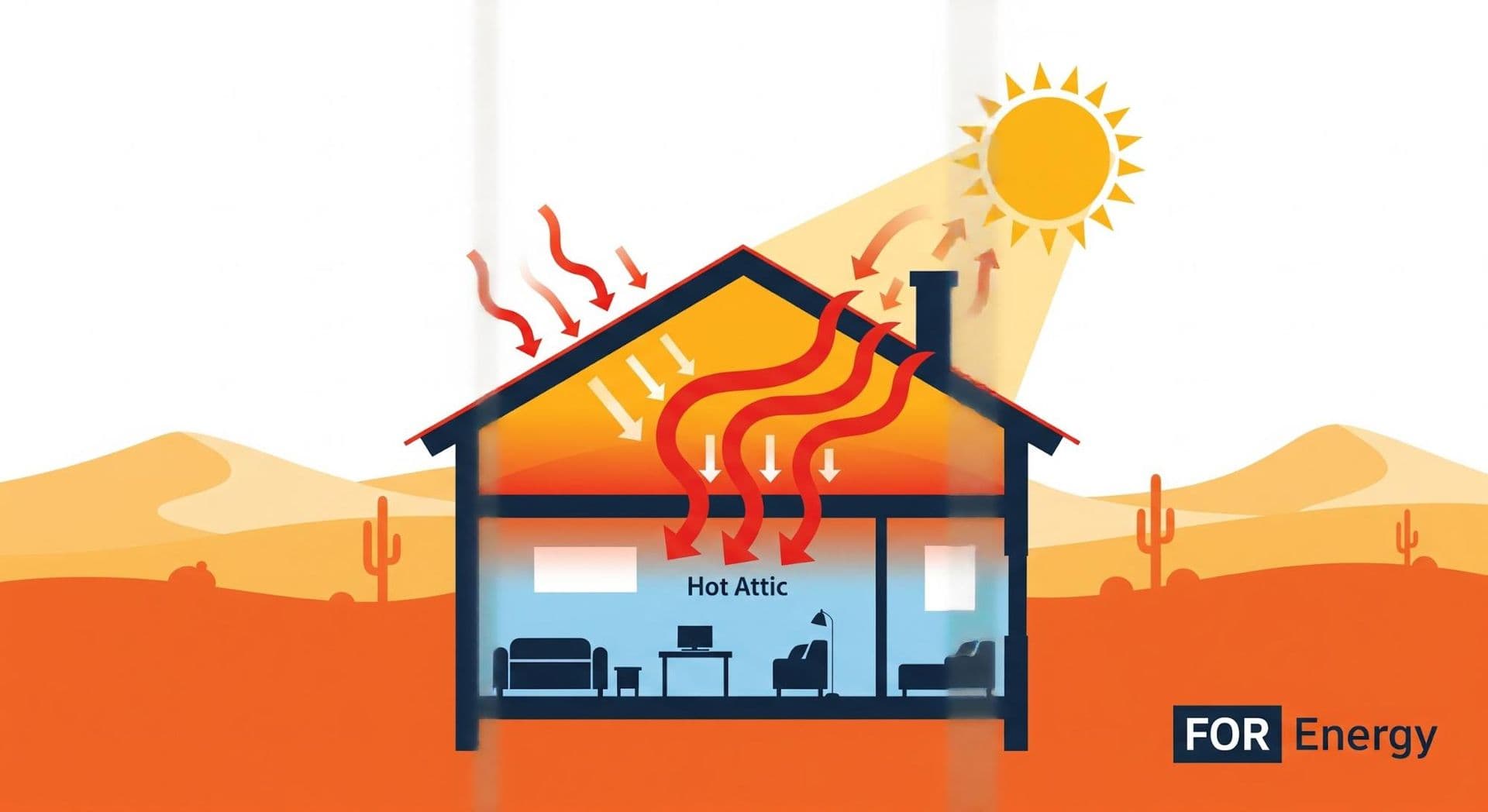
Living in the Phoenix metro area means accepting the reality of extreme heat. For months on end, the relentless Arizona sun beats down on our homes, and nowhere feels this assault more intensely than your attic. Often unventilated and directly under the roof, an attic can reach temperatures of 150°F or more on a typical summer day.
This superheated space acts like a giant radiator, constantly pushing heat downward through your ceiling and into your living areas. It’s the primary reason your air conditioner runs nonstop, your energy bills skyrocket, and some rooms never seem to cool down. Effectively managing this heat gain isn't just a matter of comfort; it's the most critical step you can take to improve energy efficiency and reduce your electricity bill. The battle for a comfortable, affordable home in Phoenix is won or lost in the attic.
Understanding R-Value and Heat Transfer in the Desert
To choose the right insulation, it’s helpful to understand how heat moves and how insulation stops it. Heat infiltrates your home in three primary ways: conduction, convection, and radiation. An effective insulation strategy must address all three.
Conduction: Heat transfer through solid materials. Think of how a metal spoon gets hot in a cup of coffee. In your home, heat conducts through the ceiling joists and framing.
Convection: Heat transfer through the movement of air. This is one of the biggest culprits in Phoenix homes, where hot attic air finds its way into living spaces through tiny, unsealed gaps and cracks.
Radiation: Heat transfer through electromagnetic waves. This is the heat you feel from the sun or a hot stovetop. Your roof absorbs immense radiant heat and emits it down into your attic.
This is where R-value comes in. In simple terms, R-value measures an insulation material's ability to resist heat flow. The higher the R-value, the better it slows down conductive and convective heat transfer. In a climate as demanding as Phoenix, a high R-value is non-negotiable, but it’s only part of the solution. To truly achieve the highest energy efficiency, you need a material that not only resists heat but also stops the air movement that carries it.
Comparing Top Attic Insulation Types for Phoenix Homeowners
Not all insulation is created equal, especially when facing the Arizona sun. Each material offers a different level of performance, and understanding these differences is key to making an informed decision for your home.
Blown-In Cellulose Insulation: Eco-Friendly & Effective Air Sealing
Blown-in cellulose is made from recycled paper products and treated to be fire, mold, and pest-resistant. When installed using the dense-pack method, it flows into every nook and cranny, creating a tight, gap-free thermal blanket. This quality makes it far superior to traditional batts at stopping convective heat transfer (air leaks). Its dense nature provides a significant R-value and an effective air barrier, making it an excellent choice for improving energy efficiency in many Phoenix homes. For a deeper look at how it stacks up against another common material, you can read our comparison of Cellulose vs. Fiberglass Insulation in Arizona.
Fiberglass Batts & Blown-In Fiberglass: Common, But Are They Enough?
Fiberglass is one of the most common insulation materials, often seen in pink or yellow rolls (batts) or as a loose-fill blown-in product. While it offers a decent R-value and is often the most affordable option, its performance can be compromised by its installation. Fiberglass batts must be cut perfectly to fit around wiring, pipes, and joists; any gap, even a small one, creates a pathway for heat. Blown-in fiberglass is an improvement, but it doesn't have the density of cellulose to effectively stop airflow, making it less effective at preventing convective heat gain.
Spray Foam Insulation: The Gold Standard for Sealing and Efficiency
For achieving the absolute highest energy efficiency, spray polyurethane foam (SPF) is often considered the gold standard. When applied, spray foam expands to create a powerful, seamless barrier that stops heat transfer in its tracks. It has an exceptional R-value per inch and, more importantly, it is a near-perfect air sealant. By eliminating virtually all air leaks, spray foam insulation stops both convection and conduction, creating a completely sealed and conditioned attic space. This level of performance can dramatically reduce AC runtime and create a more consistently comfortable home, making it a powerful long-term investment.
Radiant Barriers: Reflecting the Arizona Sun
A radiant barrier is a thin, reflective material (like foil) installed on the underside of your roof decking. Unlike traditional insulation that resists heat flow, a radiant barrier reflects radiant heat. By preventing the sun's heat from ever penetrating your attic space, it can lower attic temperatures by up to 30°F. It is crucial to understand that a radiant barrier is a complement to, not a replacement for, proper attic insulation. When combined with a high-R-value material, it creates a formidable defense against all three forms of heat transfer.
The FOR Energy Difference: Insulation as Part of a Whole-Home Solution
Simply adding insulation to your attic without addressing underlying issues is like putting a lid on a pot full of holes. True energy efficiency comes from a holistic, science-backed approach. At FOR Energy, we know that the best attic insulation is only as good as the system it's a part of. We’ve seen homes where homes lose most energy through hidden air leaks and inefficient ductwork.
That's why our process always starts by identifying the root cause of your comfort and efficiency problems. Our experts may find that combining air sealing services with new insulation will deliver the biggest impact. As our guide explains, air sealing before attic insulation is a critical step. Similarly, leaky ducts can lose up to 30% of your conditioned air before it ever reaches your rooms; our duct sealing for efficiency can solve that problem. Our complimentary Free Home Energy Checkup is designed to evaluate your entire home as a system, ensuring our recommendations will provide real, measurable results.
Tailoring Insulation to Your Home and Goals in Phoenix
So, what type of attic insulation provides the highest energy efficiency? The answer is: the right type for your home. A historic home in Central Phoenix has different needs than a newer build in the suburbs. Your budget, comfort goals, and the existing condition of your attic all play a role in the decision.
The most effective strategy might be combining dense-packed cellulose with comprehensive air sealing. For another home, the ultimate performance of spray foam insulation might be the ideal investment. The key is to move beyond guesswork and make a data-driven choice. An expert assessment provides the clarity you need to select from the available home insulation solutions with confidence. With hundreds of satisfied customers, you can read our FOR Energy reviews to see how a tailored approach makes all the difference.
Ready to Transform Your Phoenix Home's Efficiency?
Don't let the Arizona heat dictate your comfort or your energy bills. Schedule your Free Home Energy Checkup today and discover the ideal insulation solution for your home.
FAQs
What R-value is recommended for attics in Phoenix, Arizona?
Answer: For Phoenix's extreme climate, the Department of Energy recommends an R-value between R-38 and R-60 for attic insulation. However, an in-depth home energy assessment can determine the precise R-value needed for optimal performance in your specific home.
Can a radiant barrier replace traditional attic insulation in Arizona?
Answer: No, a radiant barrier is a complement, not a replacement, for traditional insulation. While it effectively reflects radiant heat, preventing it from entering your attic, it does not provide the thermal resistance (R-value) needed to stop convective and conductive heat transfer. Both work best together.
How does air sealing impact the effectiveness of attic insulation in Phoenix?
Answer: Air sealing is critical in Phoenix. Even the best insulation won't stop conditioned air from escaping through cracks and gaps in your attic. Sealing these leaks prevents significant heat transfer and moisture intrusion, allowing your insulation to perform at its maximum efficiency and drastically improving your home's comfort and energy savings.
Is spray foam insulation worth the investment in a Phoenix home?
Answer: For many Phoenix homeowners, spray foam insulation offers exceptional long-term value due to its superior air-sealing properties and high R-value, which significantly reduces heat gain and lowers cooling costs. While the initial investment is higher, the substantial energy savings and enhanced comfort often make it a worthwhile solution for the desert climate.
Schedule Your
Free Home Energy Check Up!
Recent Posts
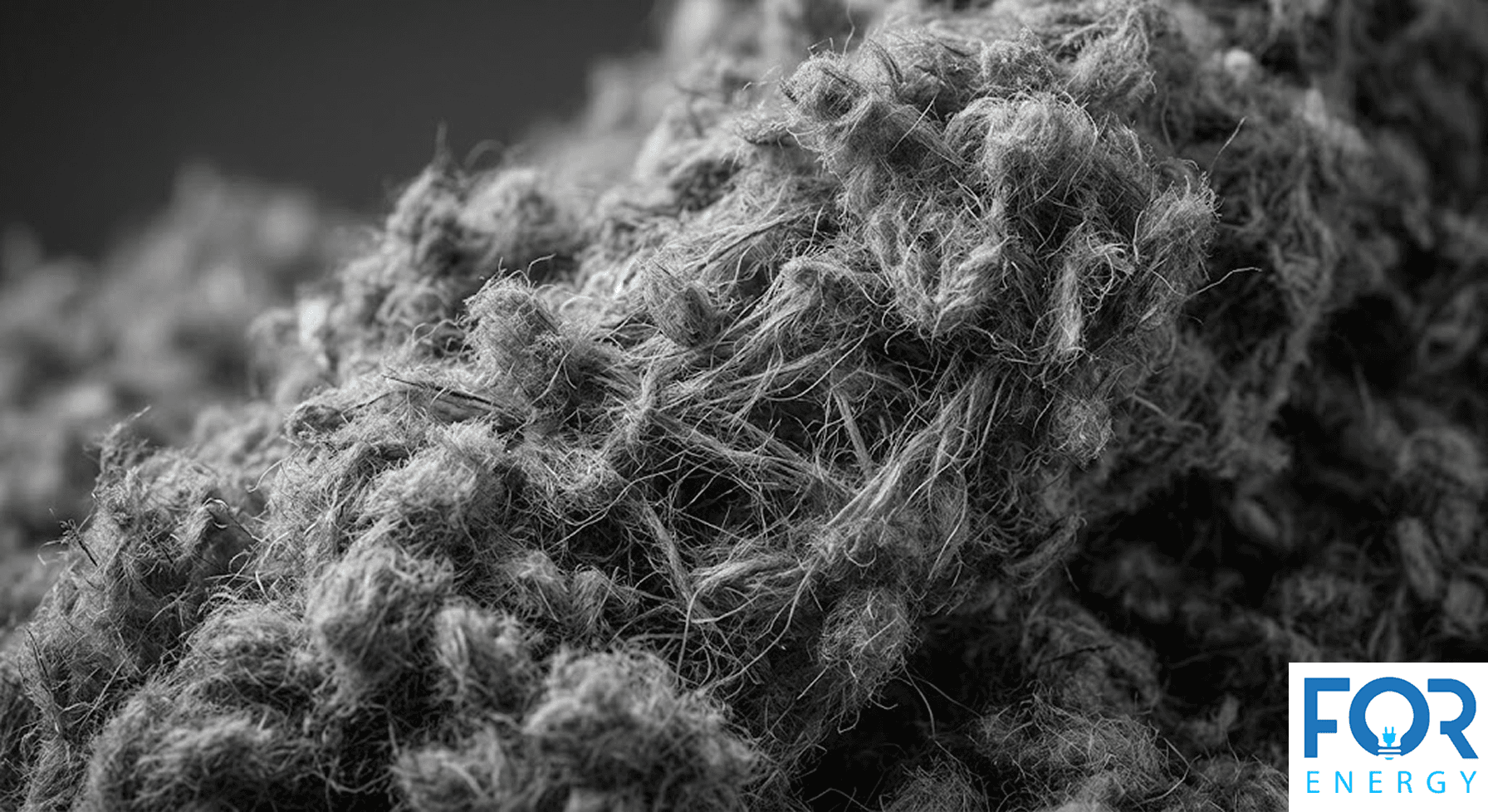
Superior Heat Resistance: Cellulose insulation has a high density and R-value, creating an exceptional thermal barrier that effectively blocks the intense radiant heat common in Phoenix.
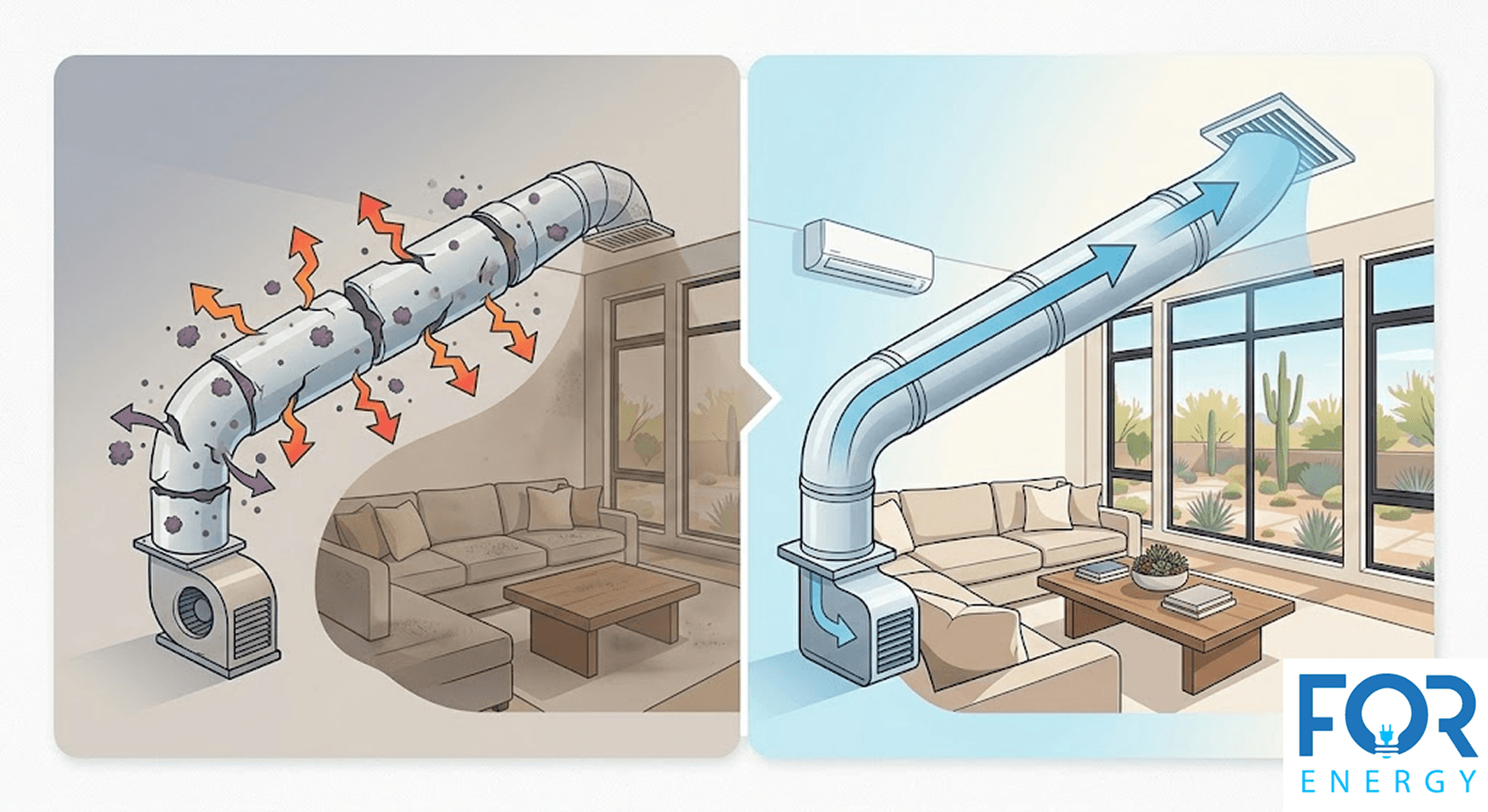
Leaky ducts can account for up to 30% of your home's conditioned air loss, leading to higher energy bills and an overworked HVAC system.
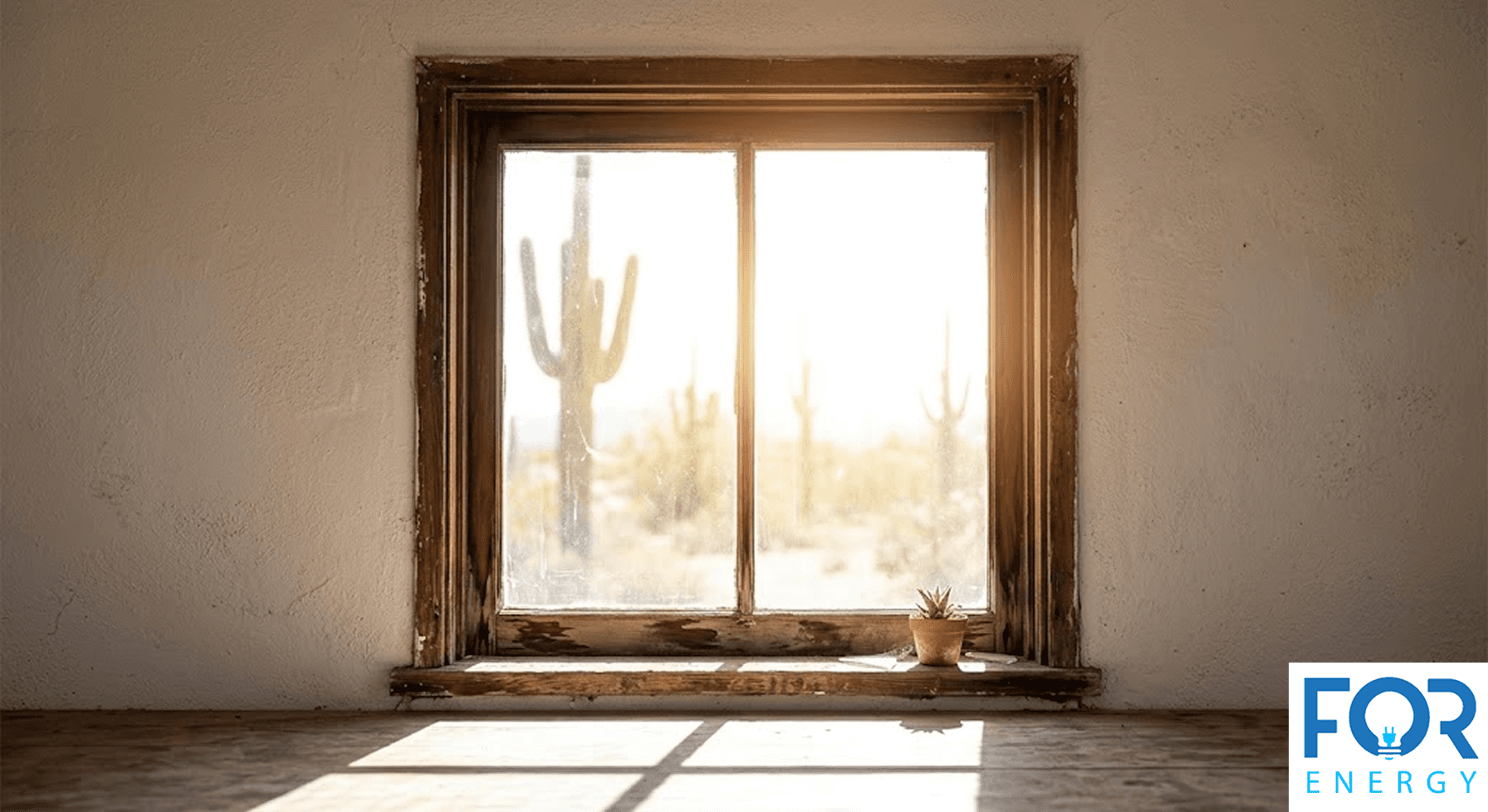
Phoenix Climate Demands Specific Solutions: Standard windows are not built for Arizona's extreme heat. Energy-efficient windows designed for our climate are one of the most effective investments you can make to lower energy bills and improve home comfort.
Featured Customer Review
The whole process with FOR Energy, a local Arizona company, has been a positive experience! Jen was knowledgeable about the pressure check and attic seal, which was the first process, and Tyler performed the check very quickly one evening, which was best for my schedule. I really enjoyed working with Eric on my contract. He was very honest and helped me pick the perfect system for our home. The best part was working with Spencer and Dylan as part of my project management team. They were very informative and responsive to my questions. They helped communicate with the city during the permitting process and kept me up to date with appointments and visits from Titan Solar, APS, and the City of Phoenix muni. I highly recommend FOR Energy! Skip the others, and stay local for your solar needs.
Schedule Your Free Home Energy Checkup With One of Our Experts
We've helped thousands of families get the best value for their money in the past 12 years
Where We Work

Mon-Thu: 8:30 AM- 7:30 PM
Fri: 8:30 AM–5:30 PM
Sat: 9:00 AM–5:30 PM
Sun: Closed