-400x299.png&w=1080&q=75&dpl=dpl_73Rd1Z1oC3NjwfsZ3zJbj3MZgbjF)
Is Blown-In Attic Insulation Worth the Cost for Phoenix Homes?
Key Takeaways
Blown-in attic insulation significantly improves home energy efficiency and comfort in Phoenix's extreme climate by creating a seamless thermal barrier.
Average costs for blown-in insulation in Phoenix range from $660 to $1,350, or $1.05 to $4.50 per square foot, often lower than the national average due to local labor costs and R-value needs.
Phoenix homeowners can expect substantial energy bill reductions, often 15-35% on cooling costs, with a typical ROI period of 3-7 years.
Blown-in insulation excels in filling irregular spaces and providing comprehensive coverage, offering superior performance compared to traditional batt insulation.
A professional home energy checkup from FOR Energy can accurately assess your attic's needs and provide tailored recommendations for optimal energy savings.
For Phoenix homeowners, the relentless summer sun isn't just a fact of life; it's a constant battle for comfort and a major driver of high utility bills. As you watch your AC unit work overtime, you've likely wondered where your hard-earned money is going. Often, the answer is right above your head: an under-insulated attic. This raises a critical question for many in Maricopa County: Is investing in blown-in attic insulation really worth the cost?
At FOR Energy, we believe in empowering homeowners with data-driven solutions, not sales pitches. The truth is, upgrading your attic insulation is one of the most impactful investments you can make for your home's energy efficiency and comfort. This guide breaks down the costs, savings, and overall value proposition to help you make an informed decision.
What is Blown-In Attic Insulation?
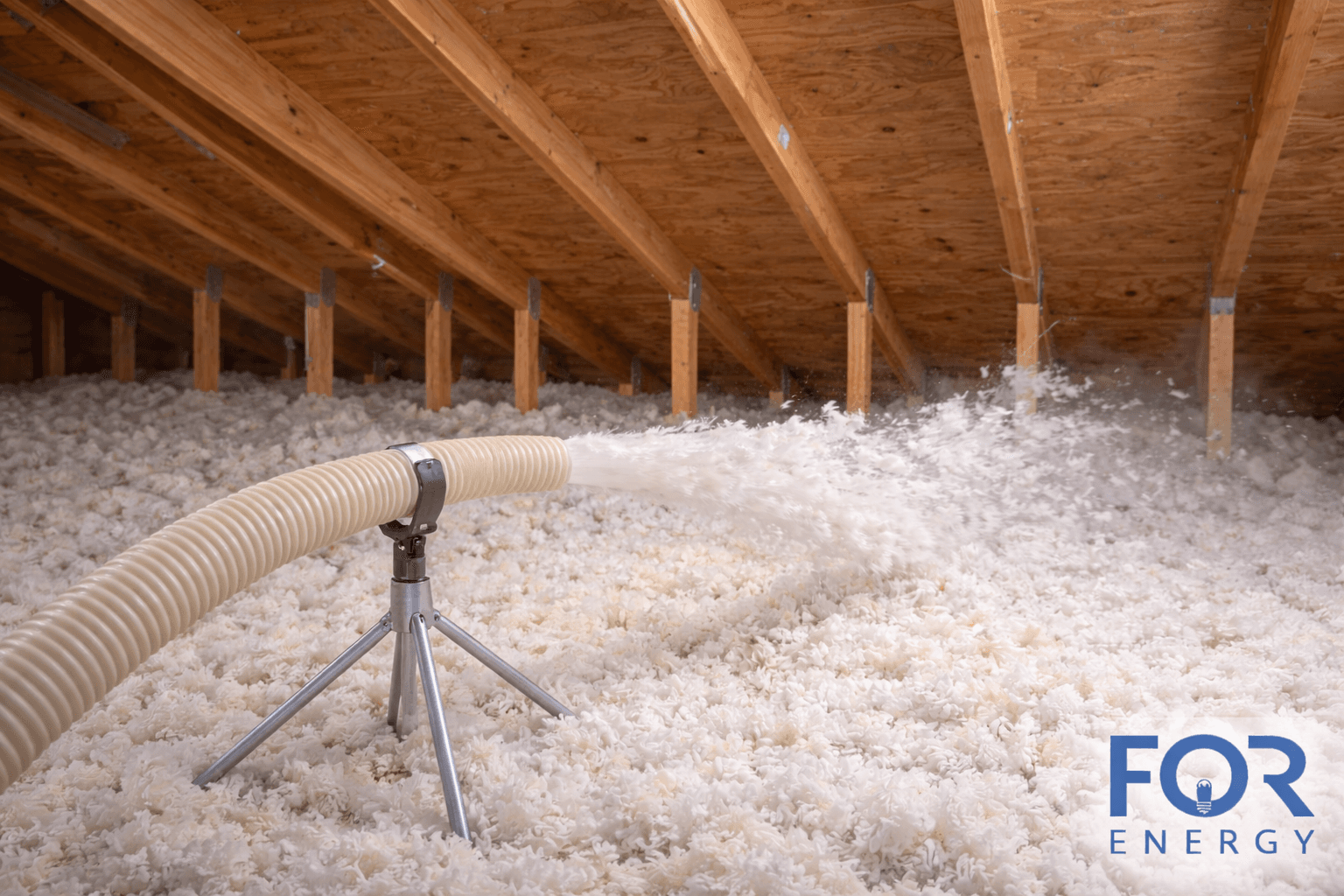
Unlike traditional insulation that comes in pre-cut batts or rolls, blown-in insulation is a loose-fill material made of small particles. During installation, specialized equipment is used to blow these particles into the attic, allowing them to settle and create a dense, seamless blanket of insulation. This method is particularly effective because it perfectly conforms to every nook, cranny, and irregular space, covering joists and getting around obstructions where batts would leave gaps.
Key materials and their characteristics
Two primary materials are used for blown-in insulation, and both are excellent choices for Phoenix homes:
Fiberglass: Made from spun glass fibers, blown-in fiberglass is lightweight, naturally fire-resistant, and does not absorb moisture, which prevents mold growth.
Cellulose: This is an eco-friendly option made from recycled paper products treated with a fire retardant. Cellulose is known for its dense packing, which provides excellent resistance to airflow.
For a more detailed comparison to help you decide which material is best for your specific needs, you can explore our guide on cellulose vs. fiberglass insulation.
Why Phoenix Attics Demand Superior Insulation
The climate in Phoenix presents a unique and extreme challenge for homeowners. On a scorching summer day, the temperature in your attic can soar to over 150°F. This intense heat radiates downward, a process known as heat transfer, warming your ceilings and forcing your HVAC system into overdrive to maintain a comfortable temperature in your living spaces.
Inadequate insulation creates a path of least resistance for this heat, leading directly to higher cooling costs and inconsistent home comfort. Proper home insulation acts as a critical thermal barrier, keeping the summer heat out and the cool, conditioned air inside.
Recommended R-values for Arizona
An insulation's effectiveness is measured by its R-value, which indicates its ability to resist heat flow. The higher the R-value, the better the insulation. For the Phoenix area (Climate Zone 2), the U.S. Department of Energy recommends an R-value between R-30 and R-60 for attics. To achieve optimal performance and savings, targeting a level between R-38 and R-49 is often the ideal strategy for local homes.
Average Cost of Blown-In Attic Insulation in Phoenix
One of the most common questions homeowners have is about the price. In Phoenix, the average cost to install blown-in attic insulation typically ranges from $660 to $1,350. On a per-square-foot basis, you can expect to pay between $1.05 and $4.50. These costs can be influenced by several factors, but they are often competitive with, or even lower than, national averages.
Factors influencing your insulation investment
Attic Size (Square Footage): Larger attics require more material and labor, increasing the overall cost.
Material Choice: The price difference between fiberglass and cellulose can vary slightly.
Existing Insulation: If old, damaged, or contaminated insulation needs to be removed, this will add to the project cost.
Air Sealing: For maximum effectiveness, insulation should be paired with air sealing. Addressing air leaks is a crucial first step that can affect the total investment. For a deeper dive, learn about the importance of air sealing before insulating.
How Much Energy Can Blown-In Insulation Save Phoenix Homeowners?
The primary motivation for many homeowners is the potential for significant energy savings. By upgrading your attic insulation, you can reduce the strain on your HVAC system, leading to substantial cuts in your monthly utility bills. According to the U.S. Environmental Protection Agency's ENERGY STAR program, homeowners can save an average of 15% on heating and cooling costs by air sealing and insulating. In a climate like Phoenix, where cooling is a dominant expense, many homeowners experience savings closer to 15-35%.
This reduction in your HVAC system's workload doesn't just save money; it also extends the lifespan of the equipment, preventing costly repairs and premature replacement. Improved HVAC efficiency is a cornerstone of whole-home energy performance.
Calculating your Return on Investment (ROI)
The return on investment for attic insulation is one of the best in the home improvement industry. With a typical payback period of 3-7 years in Arizona, the upgrade essentially pays for itself over time. Furthermore, various federal tax credits and local utility rebates may be available to help offset the initial cost, accelerating your ROI. An insulation upgrade not only saves you money each month but also adds tangible value to your property.
Blown-In Insulation vs. Other Attic Insulation Types
While several insulation options exist, blown-in material offers distinct advantages for Phoenix attics, particularly when compared to traditional fiberglass batts.
Advantages over traditional batt insulation
Fiberglass batts are large, pre-cut blankets of insulation. While effective in standard spaces, they are notoriously difficult to fit perfectly around wiring, pipes, and structural joists. This inevitably leaves gaps and creates areas of compressed insulation, both of which drastically reduce the stated R-value.
Blown-in insulation solves this problem entirely. Its loose-fill nature ensures a seamless, gap-free application that fills every void. This creates a complete thermal barrier, providing superior real-world performance and ensuring you achieve the R-value you're paying for. This comprehensive coverage is key to maximizing home energy efficiency.
When Blown-In Insulation is the Best Choice for Phoenix Homes
For homeowners in Phoenix, Arizona, blown-in insulation is often the most logical and cost-effective solution. It is the ideal choice if you are:
Looking to add insulation to an existing attic with minimal disruption.
Seeking to achieve a high, consistent R-value for maximum energy savings.
Experiencing uncomfortable rooms, hot spots, or fluctuating indoor temperatures.
Ready to make a long-term investment in reducing your cooling costs and improving your home's overall performance.
Schedule a Free Home Energy Checkup
Ultimately, the best way to determine if blown-in attic insulation is worth the cost for your specific home is with a professional assessment. A comprehensive energy audit can reveal hidden air leaks and pinpoint the exact R-value of your current insulation.
At FOR Energy, we are committed to helping Phoenix homeowners find the root cause of their energy waste and discomfort. Our expert team provides complimentary 21-point home energy checkups to give you a clear, science-backed understanding of your home's needs. We provide honest recommendations tailored to deliver the best results for your budget and comfort goals.
Ready to take control of your energy bills and enhance your home's comfort? Schedule your free consultation with FOR Energy today and find out how much you can save.
FAQs
What is the average cost to install blown-in attic insulation in Phoenix?
The average cost for blown-in attic insulation in Phoenix typically ranges from $660 to $1,350, with prices per square foot ranging from $1.05 to $4.50 depending on factors like material type and area size.
How much energy can blown-in insulation save on cooling bills in Phoenix?
Phoenix homeowners can expect significant energy savings, often seeing a 15-35% reduction in cooling costs after installing blown-in attic insulation, especially in older homes with inadequate existing insulation.
Is blown-in fiberglass or cellulose better for Phoenix attics?
Both blown-in fiberglass and cellulose are effective for Phoenix attics. Fiberglass is praised for not settling and being resistant to moisture and pests, while cellulose offers a higher R-value per inch and superior air-blocking properties, being made from recycled materials. The best choice often depends on specific attic conditions and homeowner priorities.
What R-value is recommended for attic insulation in Phoenix, Arizona?
For attics in Phoenix (Climate Zone 2), the U.S. Department of Energy recommends an R-value between R-30 and R-60, with R-38 to R-49 often cited as the ideal target for optimal energy efficiency in the intense climate.
How does blown-in insulation improve home comfort in Phoenix summers?
Blown-in insulation creates a continuous thermal barrier that resists heat transfer, keeping the intense Phoenix summer heat from penetrating the living spaces. This reduces the workload on your AC, maintains more consistent indoor temperatures, and eliminates hot spots, leading to a more comfortable home.