-400x299.png&w=1080&q=75&dpl=dpl_Hi6ZKV3Miso167J9igyQX1ihqdht)
How to Tell if Your Windows Are Causing High Electricity Costs in Phoenix
Key Takeaways
Identify common signs like drafts, hot spots, and rising cooling bills to determine if windows are costing you energy.
Understand how Phoenix's extreme heat makes inefficient windows a major contributor to high electricity costs.
Learn how aging windows strain your HVAC system and impact overall home comfort and energy efficiency.
A professional Home Energy Checkup can pinpoint window-related energy loss and offer tailored solutions.
The Silent Energy Drain: How Windows Impact Your Phoenix Electricity Bill
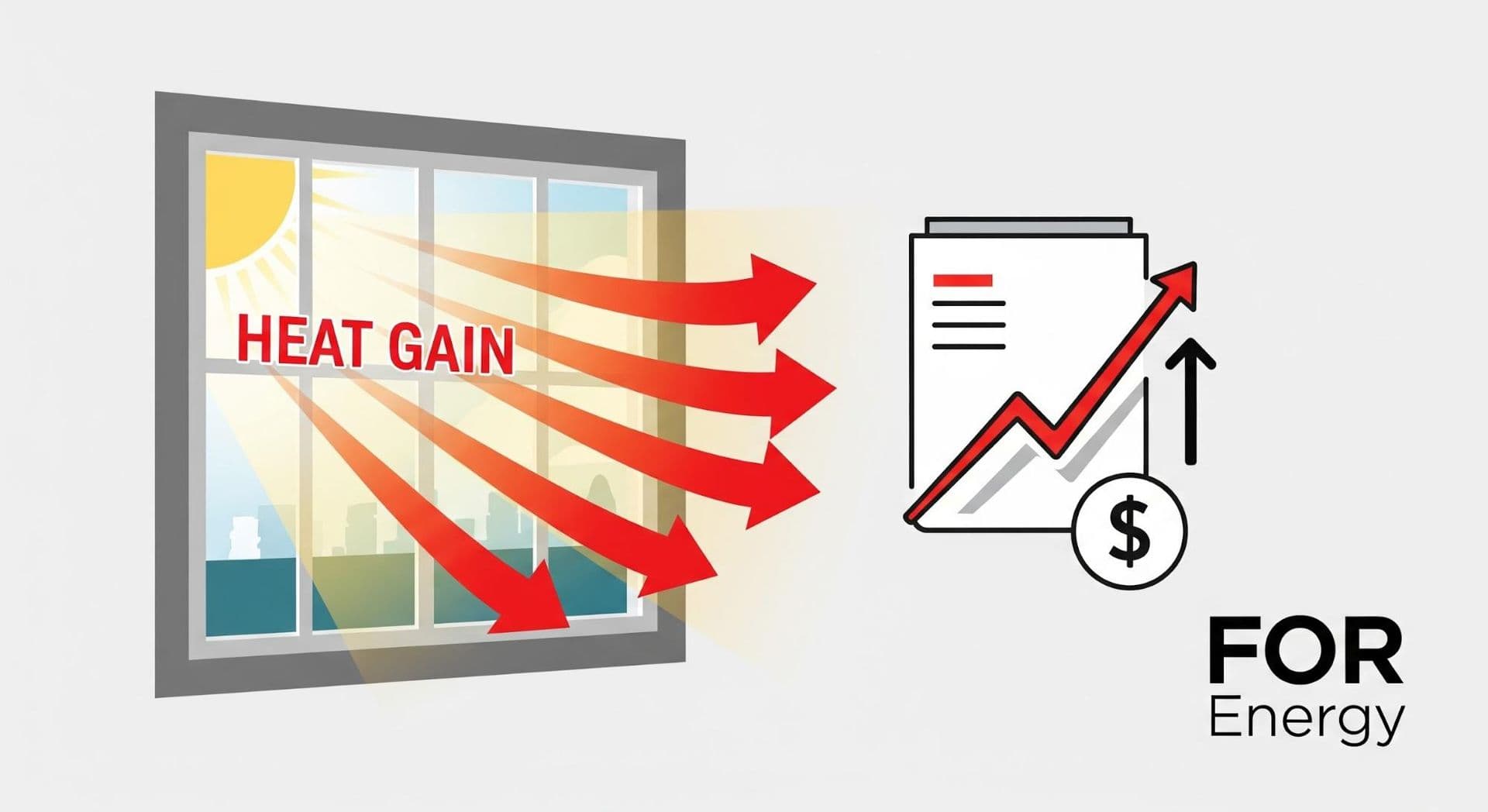
When your summer electricity bill arrives, it’s easy to blame the relentless Arizona sun. While the heat is certainly the primary driver of cooling costs, the components of your home that are supposed to protect you from it are often the real culprits. Among the most significant are your windows. In the Phoenix metro area, windows can act like thermal gateways, allowing intense solar heat to pour into your home and cooled air to escape.
This constant battle between your HVAC system and your windows is a major source of energy waste. In fact, when we look at where homes lose most energy, windows and doors are often at the top of the list. They represent a break in your home's insulated envelope, and if they aren't performing correctly, your air conditioner is forced to run longer and harder just to maintain a comfortable temperature. This extra work translates directly into higher energy consumption and, consequently, those shockingly high utility bills. Understanding the signs of poor window performance is the first step toward reclaiming your comfort and lowering your costs.
Key Signs Your Phoenix Windows Are Costing You Money
Not sure if your windows are to blame? Your home provides clues every day. By paying attention to these common indicators, you can start to diagnose whether your windows are a significant source of energy loss.
Noticeable Drafts or Air Leaks
One of the most straightforward signs of an inefficient window is a draft. Even when the window is closed and locked, you might feel a slight breeze. You can test this by holding a lit incense stick or a thin piece of tissue paper near the edges of the window frame. If the smoke or paper flutters, you have an air leak. These leaks mean your cooled, conditioned air is escaping outside while hot desert air infiltrates your home, forcing your HVAC system into overdrive.
Hot or Cold Spots Near Windows
Walk through a room on a hot summer day. Do you feel a significant temperature increase as you get closer to a window? This "hot spot" is a clear sign that your window lacks proper insulation. The glass is likely absorbing and radiating solar heat directly into your living space. An efficient window should help maintain a consistent temperature throughout the room, not create uncomfortable zones that make your home feel unevenly cooled.
Skyrocketing Cooling Bills (Especially in Summer)
While everyone in Phoenix expects higher bills during the summer, a sudden spike or a bill that seems disproportionately high compared to previous years or your neighbors can be a red flag. If your energy usage climbs dramatically as soon as the temperatures rise, your windows may be struggling to block the intense solar heat gain, a primary cause of high electricity bills in our climate. This inefficiency is one of the quickest ways to inflate your cooling costs.
Single-Pane or Old, Original Windows
If your home still has its original, builder-grade windows or single-pane glass, they are almost certainly costing you money. Window technology has advanced dramatically. Older windows, especially those with single panes of glass, offer very little resistance to heat transfer. Upgrading them is not just an aesthetic choice; it’s a significant step toward better energy performance and may involve a full Window Replacement to achieve modern efficiency standards.
Condensation Between Window Panes
Do you see fog, moisture, or haze trapped between the two panes of glass in your double-pane windows? This is a critical sign that the seal has failed. That space between the panes was originally filled with an inert gas (like argon) to provide insulation. When the seal breaks, that gas escapes and is replaced by air, which contains moisture. This condensation indicates that the window's insulating value is severely compromised.
Visible Damage, Rot, or Deterioration
Take a close look at your window frames and sills. Do you see cracked caulk, rotting wood, peeling paint, or warped frames? Any physical damage can create gaps and cracks that lead to significant air leakage. A window is only as good as its frame and seal; if these components are failing, the window cannot perform its job effectively, compromising your home's entire thermal barrier.
Fading Furniture or Floors Due to UV Rays
Have you noticed that your rugs, furniture, or artwork near a window are fading? This is caused by ultraviolet (UV) rays from the sun passing through the glass. Modern, energy-efficient windows have special low-emissivity (Low-E) coatings that block a significant portion of these harmful rays. If your belongings are fading, it’s a strong indicator that your windows lack these protective coatings, which also means they are doing a poor job of blocking solar heat.
The Phoenix Heat Factor: Why Window Efficiency is Crucial Here
Living in Arizona means dealing with a level of solar radiation that is unique compared to most of the country. For homeowners here, a window isn't just a pane of glass; it's a critical part of the home's defense against extreme heat. Inefficient windows are one of the fastest ways to lose the battle for a comfortable and affordable home. The intense, prolonged sun exposure common in our climate means that any weakness in your windows' ability to reflect heat will be exploited, directly impacting your energy consumption.
The key is minimizing solar heat gain. When the sun beats down on poor-performing glass, that energy passes through and heats up everything inside your home. Your AC then has to work constantly to remove that heat, which is an incredibly inefficient and expensive cycle. This is why it's essential to explore energy-efficient window solutions for your Phoenix home that are specifically designed for our desert climate, focusing on technologies that block heat before it can enter.
Beyond the Obvious: Understanding Hidden Window Energy Loss
While drafts and hot spots are easy to identify, some window-related energy loss is less apparent. Two key performance metrics to understand are U-factor and Solar Heat Gain Coefficient (SHGC). U-factor measures how well a window insulates, while SHGC measures how much solar heat it blocks. For Phoenix, a low SHGC is paramount.
Furthermore, even a high-quality window can perform poorly if it wasn't installed correctly. Gaps between the window frame and the wall structure can be a major source of air leakage, undermining the window's efficiency. This is why proper installation and ensuring you have adequate Home Insulation around the frame are just as important as the window itself. These hidden issues are often part of a larger picture that includes factors like inefficient Duct Sealing, contributing to a whole-home energy problem.
Your Next Step: Getting a Professional Home Energy Checkup
If you've noticed any of the signs above, you've successfully identified a potential problem. But to truly understand the extent of the issue and how it fits into your home's overall performance, a professional assessment is the best path forward. Guesswork can lead to expensive and ineffective solutions. The team here at FOR Energy believes in diagnosing the root cause before prescribing a solution. We offer a Free Home Energy Checkup to provide homeowners with clear, data-driven insights into their property's efficiency.
This comprehensive assessment goes beyond a simple visual inspection. We use diagnostic tools to pinpoint air leaks, identify insulation gaps, and measure your home's performance against Energy Star standards. It’s an educational process designed to empower you with the knowledge to make confident, informed decisions. Instead of just wondering if your windows are the problem, you can see the evidence for yourself and understand all the factors contributing to your high bills. If you’re ready to stop guessing, Schedule Your Consultation with us today.
Uncover Your Home's Energy Truth with a Free Checkup
Don't let inefficient windows drain your wallet any longer. Schedule your complimentary 21-Point Home Energy Checkup with FOR Energy today and get clarity on your home's performance.
FAQs
How much energy can I save by replacing old windows in Phoenix?
Answer: While exact savings vary by home, replacing old, inefficient windows with Energy Star® certified ones can significantly reduce your cooling costs in Phoenix's extreme heat, often by 15-25% or more on your utility bill, by minimizing solar heat gain and improving insulation.
Are all energy-efficient windows the same for Phoenix weather?
Answer: No. For Phoenix, look for windows with a low Solar Heat Gain Coefficient (SHGC) to block summer heat, and a good U-factor to minimize heat transfer. Windows with specialized low-emissivity (Low-E) coatings are particularly beneficial in our desert climate.
Can a home energy audit specifically identify window energy loss?
Answer: Yes, absolutely. A professional home energy audit from FOR Energy includes a detailed inspection that can pinpoint exactly how much energy your windows are losing, using tools like infrared cameras and blower door tests to detect air leaks and thermal inefficiencies.
Besides replacement, are there temporary solutions for inefficient windows in Phoenix?
Answer: While replacement is the most effective long-term solution, temporary fixes like sealing drafts with caulk or weatherstripping, adding heavy drapes or blinds, or applying reflective window film can offer some short-term relief from heat gain.
How do I know if my window seals have failed?
Answer: The most common sign of a failed window seal is visible condensation or fogging between the panes of glass. This indicates that the inert gas fill has escaped, and the window's insulating properties are compromised.
Schedule Your
Free Home Energy Check Up!
Recent Posts
Superior Heat Resistance: Cellulose insulation has a high density and R-value, creating an exceptional thermal barrier that effectively blocks the intense radiant heat common in Phoenix.
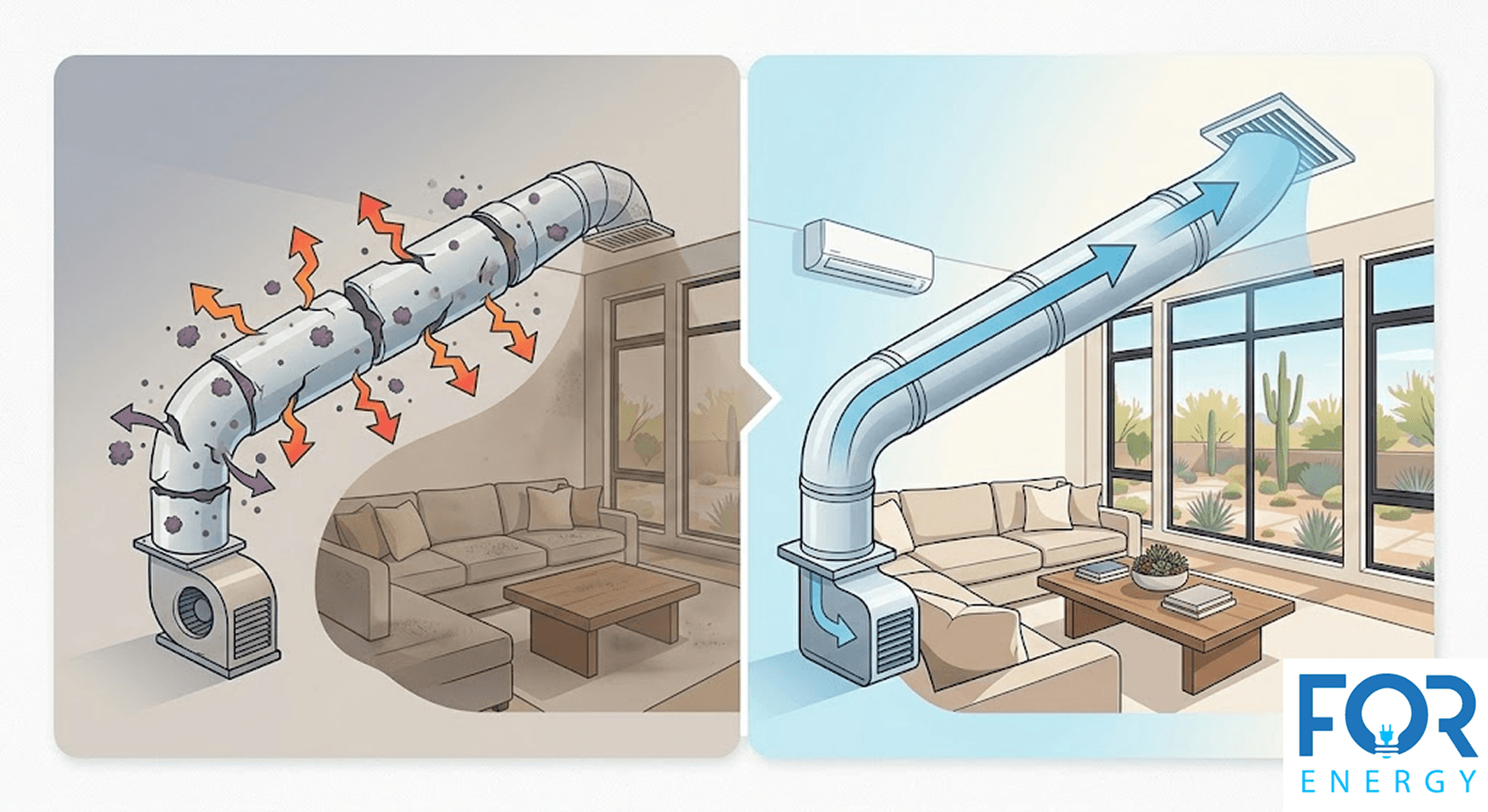
Leaky ducts can account for up to 30% of your home's conditioned air loss, leading to higher energy bills and an overworked HVAC system.
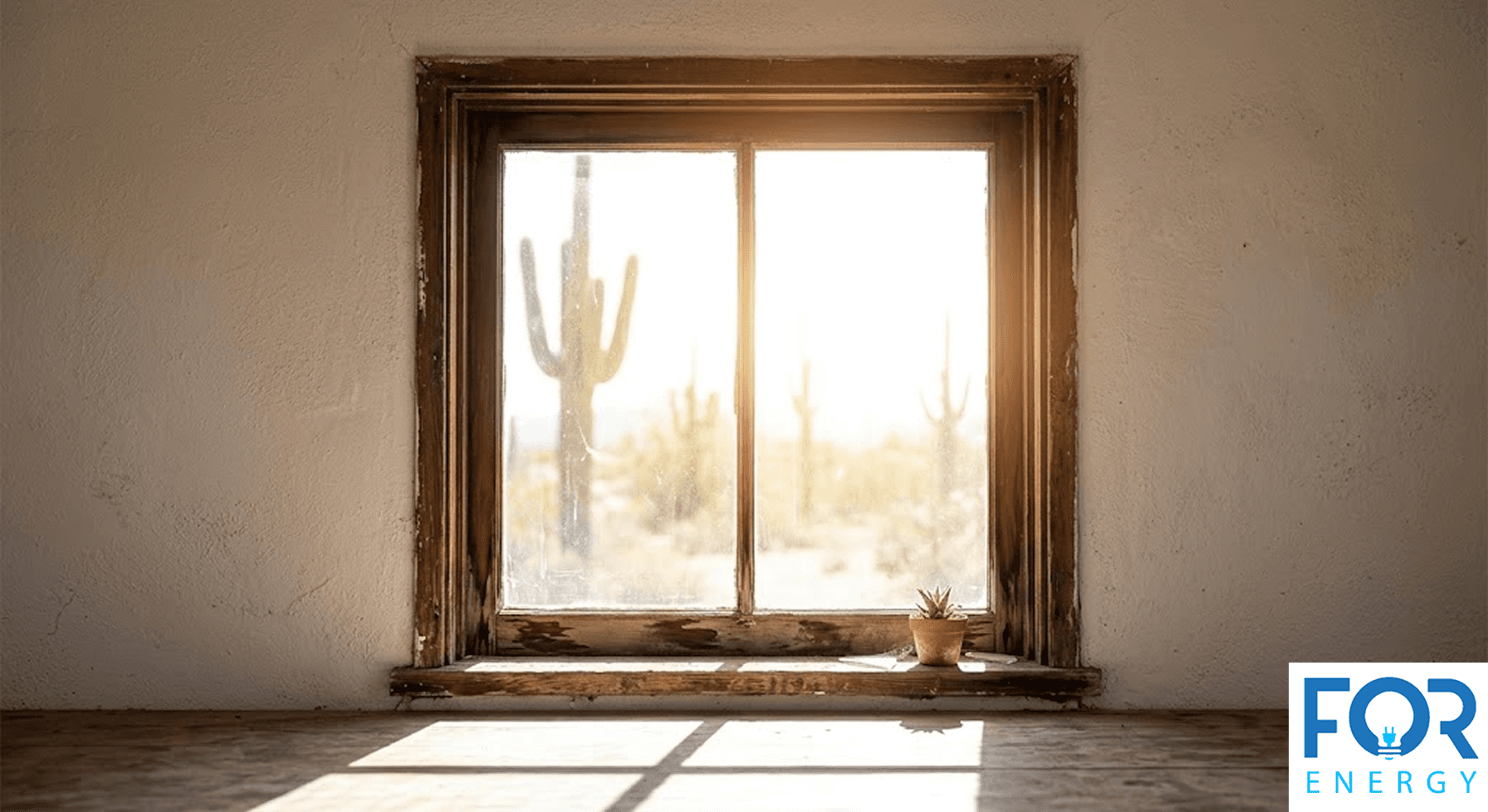
Phoenix Climate Demands Specific Solutions: Standard windows are not built for Arizona's extreme heat. Energy-efficient windows designed for our climate are one of the most effective investments you can make to lower energy bills and improve home comfort.
Featured Customer Review
The whole process with FOR Energy, a local Arizona company, has been a positive experience! Jen was knowledgeable about the pressure check and attic seal, which was the first process, and Tyler performed the check very quickly one evening, which was best for my schedule. I really enjoyed working with Eric on my contract. He was very honest and helped me pick the perfect system for our home. The best part was working with Spencer and Dylan as part of my project management team. They were very informative and responsive to my questions. They helped communicate with the city during the permitting process and kept me up to date with appointments and visits from Titan Solar, APS, and the City of Phoenix muni. I highly recommend FOR Energy! Skip the others, and stay local for your solar needs.
Schedule Your Free Home Energy Checkup With One of Our Experts
We've helped thousands of families get the best value for their money in the past 12 years
Where We Work

Mon-Thu: 8:30 AM- 7:30 PM
Fri: 8:30 AM–5:30 PM
Sat: 9:00 AM–5:30 PM
Sun: Closed