-400x299.png&w=1080&q=75&dpl=dpl_Hi6ZKV3Miso167J9igyQX1ihqdht)
How Much Can Attic Insulation Lower Your Energy Bills in Phoenix?
Key Takeaways
Phoenix attics can reach extreme temperatures (140-190°F) in summer, leading to significant heat transfer into living spaces and high cooling costs.
Proper attic insulation acts as a thermal barrier, reducing the workload on your AC system and lowering energy bills by 15-30% or more.
Achieving an R-value of R-38 to R-60 is recommended for Phoenix homes, often requiring 10-14 inches of insulation.
Air sealing is a crucial first step before insulating to prevent conditioned air leakage and maximize insulation effectiveness.
Homeowners can benefit from federal tax credits and local utility rebates (APS, SRP, Efficiency Arizona) to offset insulation upgrade costs, often seeing a 100% or higher return on investment within 3-7 years.
Why Phoenix Homes Lose Energy Through the Attic
For homeowners in Phoenix, the summer isn't just hot; it's a relentless battle against high energy bills. A major, often overlooked, source of this energy loss is the attic. Understanding how your attic contributes to your cooling costs is the first step toward a more efficient and comfortable home. This is a key area where homes lose the most energy.
Extreme Attic Temperatures in Phoenix
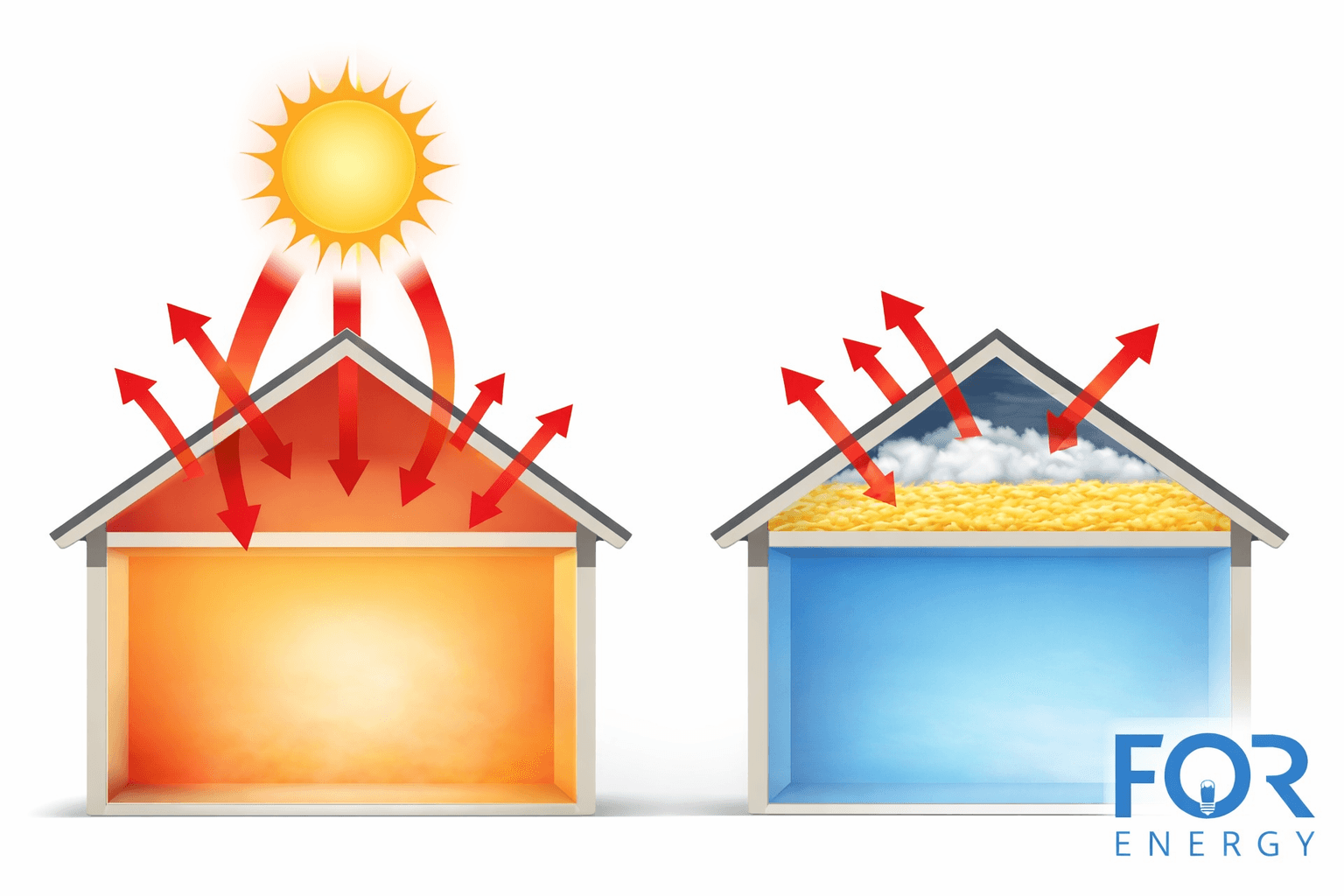
During the peak of an Arizona summer, your roof absorbs an immense amount of solar radiation. This absorbed heat is transferred into the attic, where temperatures can skyrocket to between 140°F and 190°F. This superheated air acts like an oven sitting on top of your living space, constantly working against your air conditioner's efforts to keep your home cool. Without a proper thermal barrier, that intense heat has a direct pathway into your home.
The Role of Heat Transfer in Energy Loss
Heat naturally moves from warmer areas to cooler areas through three primary mechanisms: conduction, convection, and radiation.
Conduction: Heat travels through solid materials, like the drywall of your ceiling.
Convection: Heat is transferred through the movement of fluids (in this case, air). Hot air from the attic circulates and finds its way into your home through gaps and cracks.
Radiation: Heat radiates downward from the hot roof decking to the attic floor and into your living space below.
Inadequate home insulation fails to effectively stop these processes, allowing significant heat gain that forces your HVAC system to run longer and harder, driving up your Phoenix cooling costs.
How Attic Insulation Reduces Cooling Costs in the Desert
Effective attic insulation is the most powerful tool you have to combat the intense desert heat. It functions as a thermal barrier, significantly slowing down the transfer of heat from your scorching attic into the cool, conditioned living spaces of your home. By resisting heat flow, insulation keeps the cool air your AC produces inside while keeping the oppressive summer heat out, leading to substantial energy savings.
Understanding R-Value for Phoenix Homes
The effectiveness of insulation is measured by its R-value, which indicates its resistance to heat flow. The higher the R-value, the better the insulation's performance. For Phoenix's hot climate (Climate Zone 2), the U.S. Department of Energy recommends an attic R-value between R-30 and R-60. For optimal performance and the best return on investment, achieving an R-value of at least R-38 is crucial, with R-49 often being the recommended target. This typically requires a depth of 10 to 14 inches of modern insulation material like blown-in fiberglass. A professional assessment from FOR Energy can determine your current R-value and the precise amount needed to maximize your insulation energy efficiency in Phoenix.
The Critical Role of Air Sealing
Insulation can't do its job effectively if your attic isn't properly sealed. Think of it like putting on a winter coat but leaving it unzipped; you'll still feel the cold air. Air leaks in your attic ceiling allow expensive conditioned air to escape into the attic while allowing superheated attic air to infiltrate your home. This is why air sealing is a critical first step before adding insulation. By sealing gaps, cracks, and penetrations around light fixtures, plumbing, and wiring, we create a complete thermal envelope. This ensures that the insulation can perform at its maximum potential, trapping the cool air where it belongs. For a deeper look at this process, explore our services on air sealing.
Average Energy Savings and ROI From Attic Insulation in Phoenix
Investing in attic insulation is one of the most cost-effective home improvements for a Phoenix homeowner. Properly insulating and air sealing your attic can reduce your cooling costs by 15-30% on average. Some studies suggest that in Arizona's extreme climate, savings could be as high as 40-60% when insulation is optimized.
This translates into hundreds of dollars in annual savings on your utility bills. The return on investment (ROI) for attic insulation is exceptionally high, often exceeding 100%. Most homeowners in the Phoenix area see a full payback on their investment within just 3 to 7 years, making it a financially sound decision that improves comfort and adds value to your home.
How Insulation Improves HVAC System Efficiency and Comfort
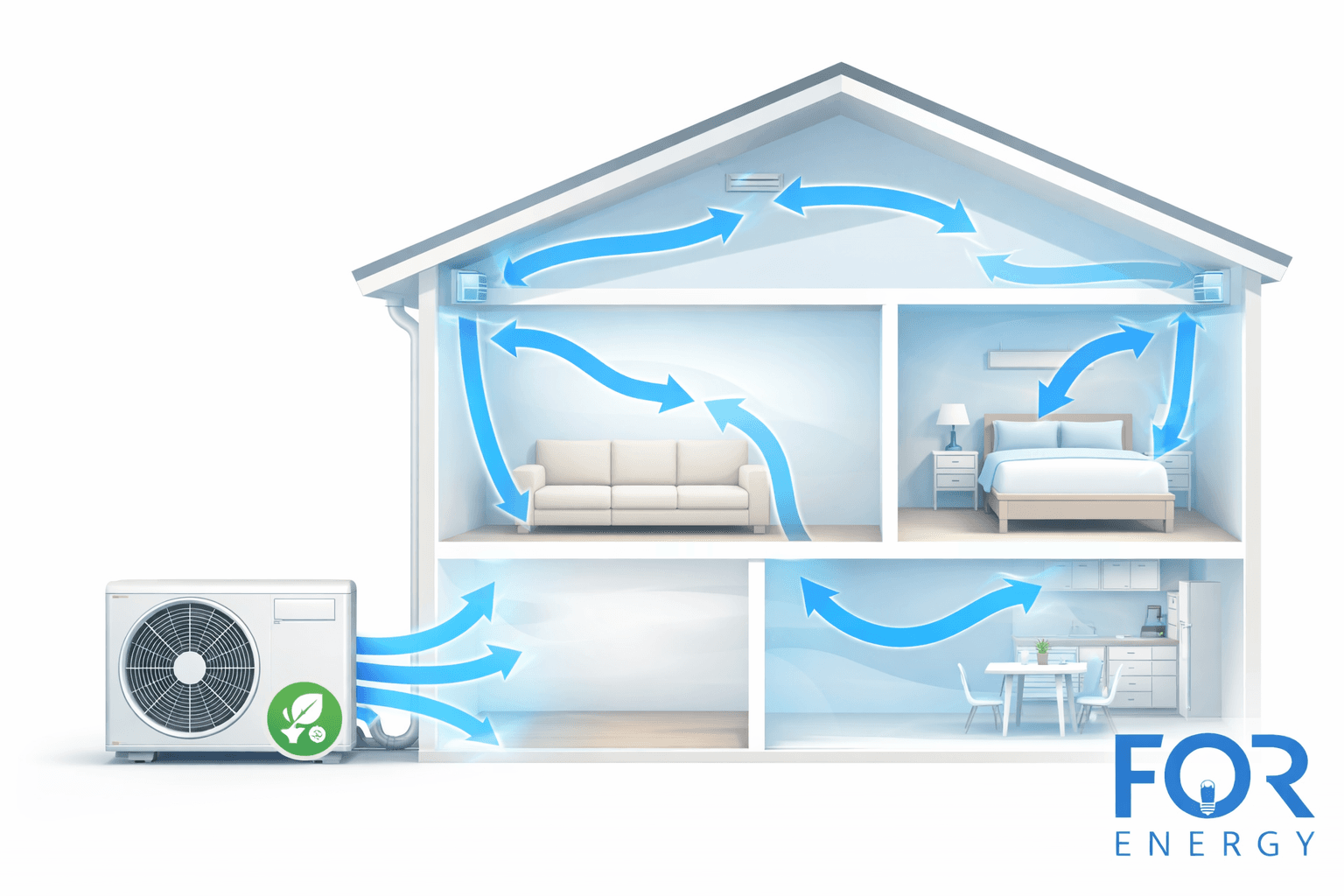
Upgrading your attic insulation doesn't just lower your energy bills; it also has a direct positive impact on your home's heating, ventilation, and air conditioning (HVAC) system and overall comfort. By creating a robust thermal barrier, insulation dramatically reduces the amount of heat entering your home.
This lessened heat load means your air conditioner doesn't have to work as hard or run as long to maintain your desired temperature. The benefits are twofold: reduced energy consumption and less wear and tear on your expensive HVAC equipment, which can extend its operational lifespan. Furthermore, a well-insulated attic helps eliminate uncomfortable hot spots and creates more consistent, even temperatures from room to room. This is especially true when combined with other services like duct sealing, which prevents conditioned air from leaking in the attic.
Signs Your Phoenix Home Needs More Attic Insulation
Not sure if your home is under-insulated? There are several common warning signs that Phoenix-area homeowners in cities like Mesa, Scottsdale, and Chandler should watch for:
High Energy Bills: If your summer cooling costs are consistently high, it's a primary indicator that your AC is working overtime to compensate for heat gain.
Constantly Running AC: Your air conditioner should cycle on and off. If it runs almost continuously, it's struggling to keep up with the heat penetrating your home, often from the attic.
Uneven Home Temperatures: Are your upstairs rooms noticeably hotter than the downstairs? This is a classic sign of poor attic insulation allowing heat to build up on the top floor.
Visible Insulation Issues: A quick look into your attic can be revealing. If you can see the tops of your ceiling joists, you almost certainly need more insulation. Old, compressed, dirty, or water-damaged insulation is also ineffective.
If you recognize these symptoms, it's time to learn more about how to tell if your attic insulation needs to be replaced. While you can choose between different materials, a comparison of cellulose vs. fiberglass insulation can help you decide what's best for your Arizona home.

Maximize Your Savings: Rebates and Incentives for Phoenix Homeowners
Making the investment in attic insulation is even more affordable thanks to a variety of valuable financial incentives. Homeowners across Gilbert, Glendale, Tempe, and Peoria can leverage these programs to significantly reduce their out-of-pocket costs.
Federal Tax Credits: The Energy Efficient Home Improvement Credit allows homeowners to claim a tax credit for 30% of the cost of qualified insulation upgrades, up to $1,200 annually. This is a dollar-for-dollar reduction of your tax liability.
Utility Rebates (APS & SRP): Both APS and SRP offer substantial rebates for home performance upgrades. Homeowners can receive hundreds of dollars back for attic insulation, duct sealing, and air sealing performed by a qualified contractor.
Efficiency Arizona: This state-managed program, funded by the U.S. Department of Energy, can provide significant rebates, sometimes up to $14,000, for qualifying low- and moderate-income households to make energy efficiency improvements.
Navigating these programs can be complex, but FOR Energy helps you identify and apply for all the incentives you're eligible for to maximize your savings.
Schedule Your Free Home Energy Checkup for Optimized Savings
The first step to unlocking significant energy savings is understanding where your home is losing energy. FOR Energy takes a science-backed, whole-home approach rather than just treating symptoms. We are committed to identifying the root causes of high energy bills and discomfort.
We invite you to schedule a complimentary 21-point Home Energy Checkup. Our experts will perform a thorough assessment, including an in-depth look at your attic insulation, to provide a personalized plan for improving your home's performance. Learn more about the benefits with our comprehensive guide to a home energy checkup. Let us help you create a more comfortable, affordable, and energy-efficient home. For a complete evaluation, consider a full home energy audit.
FAQs
How much money can I save on my energy bills with new attic insulation in Phoenix?
Homeowners in Phoenix can typically save 15-30% on their summer cooling bills with proper attic insulation, potentially reducing annual expenses by hundreds of dollars. When combined with air sealing, savings can be even higher.
What R-value is recommended for attic insulation in Phoenix homes?
For Phoenix's Climate Zone 2, the U.S. Department of Energy recommends an attic insulation level between R-30 and R-60. An optimal target R-value to aim for is often R-38 to R-49, providing substantial thermal resistance without diminishing returns.
What are the signs that my Phoenix attic insulation is not sufficient?
Key signs include consistently high energy bills, your air conditioner running constantly, noticeable temperature differences between rooms or floors, feeling drafts, or if your existing insulation appears old, compressed, dirty, or sparse enough to see the wood ceiling joists.
Are there any rebates or tax credits for attic insulation in Phoenix?
Yes, Phoenix homeowners may qualify for a federal tax credit of 30% of the cost (up to $1,200 annually) for qualified insulation. Additionally, local utilities like APS and SRP offer rebates for insulation and related energy efficiency upgrades, and the Efficiency Arizona program may provide significant incentives for eligible households.
What types of insulation are best for Phoenix's hot climate?
For Phoenix's hot, dry climate, insulation types like blown-in fiberglass, cellulose, and spray foam are highly effective at resisting heat transfer. Combining these with air sealing and potentially a radiant barrier can maximize energy savings.