-400x299.png&w=1080&q=75&dpl=dpl_Df9nbijWDZqk7LboESf1kkPpUa81)
Can You Safely Mix Cellulose and Fiberglass Insulation in Your Attic? A Comprehensive Guide

For homeowners in Phoenix, optimizing attic insulation is key to maintaining comfort and managing energy bills, especially with our extreme temperatures. You might be considering whether combining different insulation types, like cellulose and fiberglass, could offer a quick boost. At FOR Energy, a trusted Home Performance with Energy Star® remodeler in Phoenix, we understand these concerns and are here to provide clear, expert guidance on navigating your insulation options to ensure your home performs its best.
Key Takeaways
While technically possible, mixing cellulose and fiberglass insulation isn't generally recommended without professional assessment due to potential performance issues.
Improper mixing can lead to reduced R-value, moisture problems, and air gaps, undermining energy efficiency and home comfort.
Superior alternatives for Phoenix homeowners include professional air sealing and adding a uniform layer of high-quality insulation.
FOR Energy's complimentary 21-Point Home Energy Checkup identifies root causes of inefficiency and recommends data-backed, tailored solutions.
Can You Safely Mix Cellulose and Fiberglass Insulation in Your Attic?
Mixing cellulose and fiberglass insulation in your attic is generally not recommended as a DIY solution and requires careful professional assessment to avoid potential performance issues. While it is technically possible to layer them, the differing properties of these materials mean that simply combining them doesn't automatically create a more effective insulation system. In our experience at FOR Energy, we've found that a uniform, properly installed insulation system almost always outperforms a haphazard mix.
Cellulose insulation, typically made from recycled paper, is dense and good at air sealing, while fiberglass, made from spun glass fibers, excels at trapping air and resisting heat flow. When these materials are mixed without understanding their unique characteristics and proper installation techniques, you risk creating thermal performance inconsistencies that can lead to air gaps, moisture problems, and a reduced overall R-value. Our team consistently advises homeowners in Phoenix to consider a single, high-quality insulation type or a professionally designed, installed combination that works cohesively, especially after a thorough home energy audit.
What Are the Potential Challenges and Downsides of Mixing Insulation Types?
Mixing cellulose and fiberglass insulation without a professional plan can introduce several significant challenges, potentially compromising your home's energy efficiency and long-term comfort. Issues can range from reduced thermal performance due to compression and air gaps to increased risks of moisture accumulation and even challenges in assessing fire safety, despite modern materials being treated. At FOR Energy, we regularly see the pitfalls of unguided insulation attempts.
One of the primary concerns is the impact on R-value. Fiberglass insulation, particularly batts, relies on its loft to trap air; if cellulose is blown over it and compresses the fiberglass, its effective R-value can decrease significantly. Conversely, if dense cellulose is installed incorrectly over lightweight fiberglass, it can settle unevenly and create pathways for air leakage, negating insulation benefits. Moisture control is another critical factor; cellulose and fiberglass react differently to moisture, and an unsealed mix can trap humidity, leading to mold growth or material degradation, especially during the humid monsoon season we experience in Phoenix. While modern insulation materials are treated for fire resistance, the specific interaction of mixed materials, especially if not professionally installed to code, can be a concern for some homeowners, highlighting the need for expert guidance. These issues can undermine the very goal of improved energy efficiency, often leading to wasted investment.
When Might Mixing Insulation Be Considered, and What Are the Alternatives?
While mixing insulation types is generally discouraged, there are rare, specific scenarios where a professional might integrate different materials, such as when dealing with existing minimal layers in an attic with unique structural constraints. However, in our practice at FOR Energy, we find that far more effective and reliable solutions exist for Phoenix homeowners aiming to improve energy efficiency, focusing on whole-home performance rather than just adding layers.
More often, the better approach involves comprehensive solutions like expert air sealing, installing a uniform layer of new insulation, whether high-quality cellulose or fiberglass, or addressing crucial issues like duct leakage, all of which offer more predictable and significant improvements. These strategies provide a holistic upgrade to your home's thermal envelope, ensuring consistent performance and long-term comfort, which is precisely what we help homeowners achieve.
Why a Uniform Approach Often Outperforms Mixed Layers
A uniform layer of a single insulation type, whether cellulose or fiberglass, almost always provides a more predictable, consistent R-value across your entire attic. When you have one material, its performance characteristics are known and can be optimized for installation, reducing the likelihood of thermal bridging, air gaps, and uneven coverage. For homeowners in Phoenix, where consistent thermal resistance is crucial for battling the heat, this reliability is paramount. This contrasts sharply with mixing, where the different densities, air-trapping abilities, and moisture responses of materials like cellulose vs. fiberglass insulation for Arizona homes can lead to unpredictable results, often creating more problems than they solve. Our team at FOR Energy prioritizes solutions that guarantee maximum return on your investment in home performance.
The Importance of Air Sealing Before Any Insulation Project
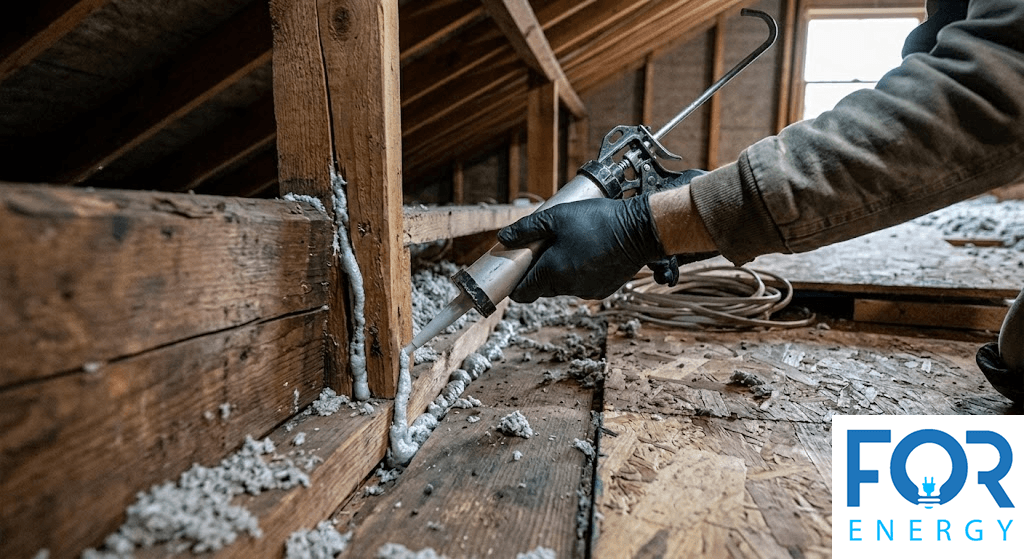
Before considering any insulation upgrade, especially in the Phoenix area, the importance of proper air sealing before adding insulation cannot be overstated. Insulation works by slowing heat transfer, but it cannot stop air movement. Unsealed gaps and cracks in your attic floor and throughout your home allow conditioned air to escape and unconditioned air to infiltrate, creating drafts and undermining even the best insulation. Common areas where homes lose energy through air leakage include utility penetrations, attic hatches, and gaps around recessed lighting. At FOR Energy, our data-backed approach always starts with identifying and sealing these leaks, ensuring that any subsequent insulation investment delivers its full potential. Without effective air sealing, even the highest R-value insulation will struggle to provide optimal comfort and energy savings.
How Can FOR Energy Help Phoenix Homeowners Optimize Their Attic Insulation?
FOR Energy helps Phoenix homeowners optimize their attic insulation by taking a comprehensive, data-driven approach that goes far beyond simply adding more material. Our commitment is to identify the root causes of energy inefficiency and prescribe tailored, Energy Star-compliant solutions that genuinely improve home comfort and lower utility bills. We don't just guess; we assess.
Our process begins with our complimentary 21-Point Home Energy Checkup, which is an essential first step for any homeowner in the Phoenix metro area concerned about their insulation, high energy bills, or inconsistent comfort. This in-depth assessment scientifically evaluates your entire home's performance, including a detailed analysis of your existing attic insulation, air sealing, and overall thermal envelope. We identify specific issues, like signs your attic insulation needs replacement, or if professional insulation removal services are necessary before an upgrade. This thorough approach ensures that our recommendations, from insulation removal to new installations, are precisely what your home needs, aligning with our philosophy of solutions over profit. Our transparent consultation process educates you on your home's unique energy profile, empowering you to make informed decisions for maximizing overall home energy efficiency, rather than just masking symptoms.
Understanding Your Home’s Unique Energy Profile
Every home in Phoenix has a unique energy profile, influenced by its age, construction, orientation, and even the habits of its occupants. Simply adding more insulation without understanding this profile can be like putting a Band-Aid on a deeper problem. Our schedule a complimentary 21-Point Home Energy Checkup uses advanced diagnostics to pinpoint exactly where your home is losing energy, be it through inadequate insulation, air leaks, or inefficient HVAC systems. This scientific approach enables us to recommend targeted solutions tailored to your home's specific needs, ensuring your investment delivers tangible improvements in comfort and efficiency. We prioritize long-term, sustainable results over quick fixes, giving you the peace of mind that comes from a truly optimized home.

Navigating the complexities of attic insulation, especially in a climate like Phoenix, doesn't have to be a guesswork game. While the idea of mixing cellulose and fiberglass insulation might seem like a straightforward solution, it often introduces more variables than benefits. Our team at FOR Energy advocates for a professional, holistic approach, focusing on solutions that deliver proven results. We believe in empowering you with knowledge and tailored strategies for a more comfortable, energy-efficient home, adhering to the highest Energy Star standards.
Wondering if your Phoenix attic insulation is truly optimized? Schedule your complimentary 21-Point Home Energy Checkup with FOR Energy today to get data-backed insights and personalized solutions for a more comfortable and efficient home. No sales pitch, just solutions.
FAQ
Q: Is it generally safe to mix different types of insulation in my attic?
A: While technically possible, mixing insulation types like cellulose and fiberglass isn't generally recommended without a professional assessment due to potential issues with R-value consistency, moisture, and overall performance.
Q: Can mixing cellulose and fiberglass insulation reduce my home's energy efficiency?
A: Yes, if not properly installed, mixing can lead to uneven thermal resistance, air gaps, or compression, which can significantly reduce the effective R-value and negate efforts to improve energy efficiency.
Q: What are the main concerns when considering mixing cellulose and fiberglass insulation?
A: Primary concerns include managing moisture, ensuring consistent R-value without compression, fire safety (though modern materials are treated), and maintaining uniform air sealing, all of which impact long-term performance.
Q: Should I remove existing insulation before adding new, different insulation?
A: In many cases, professional insulation removal is recommended, especially if the existing insulation is old, damaged, wet, or contaminated, to ensure the new layer performs optimally and avoids compounding problems.
Q: How can FOR Energy determine the best insulation solution for my Phoenix home?
A: FOR Energy offers a complimentary 21-Point Home Energy Checkup, which scientifically assesses your attic and entire home's performance to recommend data-backed, Energy Star-compliant insulation and air sealing solutions tailored to your specific needs.