-400x299.png&w=1080&q=75&dpl=dpl_Hi6ZKV3Miso167J9igyQX1ihqdht)
How Air Sealing Improves Home Comfort and Temperature Consistency in Phoenix Homes
Key Takeaways
Air sealing eliminates drafts and uneven temperatures by preventing unwanted air leakage throughout your Phoenix home.
By creating a tighter building envelope, air sealing significantly reduces heat gain during Arizona's scorching summers, improving AC performance and lowering energy bills.
Air sealing works synergistically with insulation to stabilize indoor conditions, minimize HVAC cycling, and enhance overall comfort and indoor air quality.
FOR Energy's whole-home approach, including diagnostic testing, identifies and seals critical leak points in attics, walls, and around penetrations.
Investing in professional air sealing is a foundational step toward a more efficient, comfortable, and healthier living environment in the Phoenix metro area.
Understanding Air Leaks: The Silent Saboteur of Comfort
Living in the Phoenix metro area means constantly battling the heat. You rely on your air conditioner to provide a cool refuge, but what if your home is secretly working against you? The culprit is often unseen air leaks, tiny gaps, cracks, and openings throughout your home’s structure that let scorching outdoor air infiltrate your living space. This unwanted air exchange undermines your comfort, creating frustratingly inconsistent temperatures and forcing your HVAC system to work overtime.
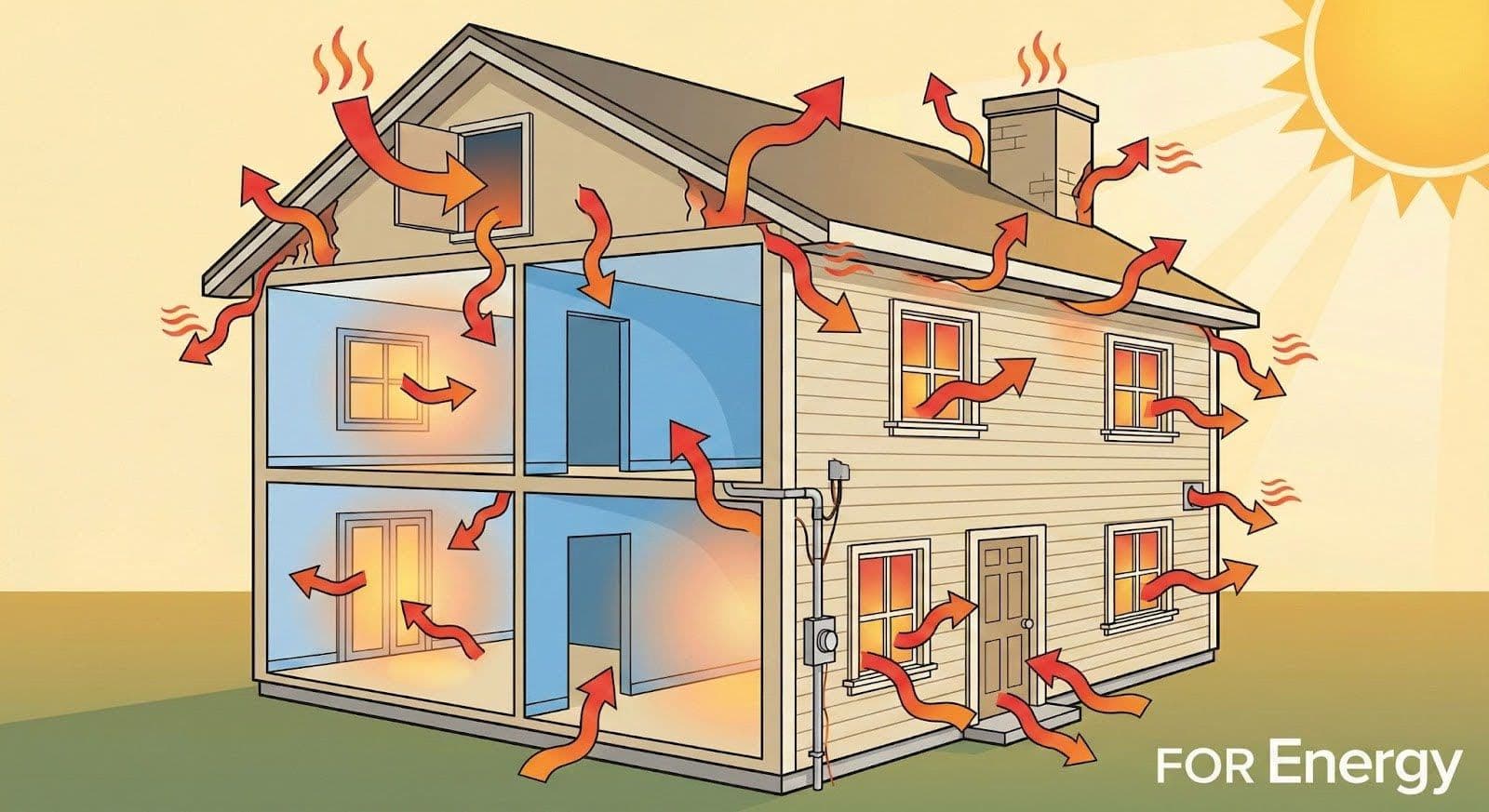
These leaks act as invisible highways for heat. While you might notice obvious drafts around windows and doors, the most significant problems are often hidden in your attic, basement, and walls. These countless small leaks collectively compromise your home's "building envelope," the physical barrier between the conditioned interior and the extreme elements outside. For homeowners in Phoenix, this means the oppressive summer heat is constantly seeping in, sabotaging your efforts to stay cool.
Common culprits of air leakage
Air leakage doesn't come from one single source; it's the cumulative effect of many small openings. Understanding where do homes lose most energy is the first step to solving the problem. Common culprits include:
Attic Penetrations: The attic is a primary source of leaks. Openings around recessed lighting fixtures, plumbing stacks, electrical wiring, and attic access hatches allow superheated attic air to enter your home.
Wall Gaps: Gaps around electrical outlets, switch plates, and plumbing penetrations under sinks create direct paths for air to move through your walls.
Windows and Doors: Old or poorly installed windows and doors often have inadequate weatherstripping, allowing significant drafts.
Foundation and Sill Plates: The point where the foundation meets the wood framing of your home is a common area for cracks and gaps.
These seemingly minor issues add up, creating a constant flow of unconditioned air that leads to hot spots, drafts, and a home that never feels truly comfortable.
The "Stack Effect" in Phoenix homes
A phenomenon known as the "stack effect" makes these leaks even more problematic, especially in our climate. It works like a chimney: as your AC cools the air inside, any warmer, more buoyant air rises. This air escapes through leaks in the upper levels of your home, like your attic. This process creates a slight negative pressure in the lower levels of your home, which in turn pulls hot, unconditioned outdoor air in through leaks in the foundation, walls, and around windows. During a Phoenix summer, this means your home is actively sucking in 110-degree air, directly fighting your air conditioner and driving up your energy bills.
How Air Sealing Creates a More Consistent Indoor Environment
The most effective solution to this rampant air leakage is professional air sealing. This process is a systematic approach to finding and sealing the countless gaps and cracks that compromise your home's thermal barrier. By applying durable materials such as caulk, foam sealants, and weatherstripping, specialists create a continuous, airtight building envelope. The goal is not to make your home completely airtight; mechanical ventilation is still important, but to stop the uncontrolled flow of air.
By blocking these pathways, air sealing puts you back in control of your indoor climate. Conditioned air stays inside where it belongs, and unconditioned air stays out. This immediately stabilizes indoor temperatures, eliminating the frustrating hot and cold spots that force you to constantly adjust the thermostat. The result is a home that feels consistently comfortable in every room, day and night.
Stopping the influx of extreme Phoenix heat
For Phoenix homeowners, the primary benefit of a sealed home is its ability to block the relentless summer heat. When your building envelope is tight, the intense solar radiation and scorching ambient air can no longer easily penetrate your living space. This drastically reduces the heat gain in your home, so your air conditioner doesn't have to run as long or as hard to maintain the desired temperature. It’s a foundational step in creating a home that is truly designed to perform in our demanding desert climate.
The Synergy: Air Sealing and Insulation for Optimal Performance
Many homeowners believe that adding more insulation is the only way to combat high energy bills and discomfort. However, insulation and air sealing are two different tools that work together to create a truly efficient home. Think of it this way: insulation is like a cozy sweater, and air sealing is like a windbreaker. A sweater on a windy day won't keep you very warm because the cold air cuts right through it. But when you add the windbreaker, the sweater can do its job effectively.
The same principle applies to your home. Your home insulation is designed to slow the transfer of heat, but it can't stop air movement. When gaps and cracks allow air to flow through or around your insulation, its performance is severely compromised. By addressing this, air sealing before attic insulation ensures that your insulation can achieve its maximum potential. Similarly, a comprehensive approach includes evaluating and sealing your ductwork, as leaky ducts can waste a significant amount of cooled air. For more on this, check out our duct sealing services.
Maximizing R-value and minimizing heat gain
Insulation's effectiveness is measured by its R-value, or its resistance to heat flow. However, the listed R-value is only accurate under ideal conditions. When hot Phoenix air bypasses the insulation through leaks, the effective R-value plummets. Air sealing eliminates this bypass, ensuring that heat must travel through the insulation rather than around it. This allows your insulation to perform as intended, creating a powerful thermal envelope that minimizes heat gain and keeps your home consistently cool and comfortable even during triple-digit summer days.
Beyond Comfort: Energy Savings and HVAC Longevity
The benefits of air sealing extend far beyond just feeling more comfortable. By creating a more efficient building envelope, you drastically reduce the demand on your HVAC system. When your home retains its conditioned air and resists heat gain, your air conditioner can reach the set temperature more quickly and cycle off for longer periods. This reduction in runtime translates directly into lower energy consumption and significant savings on your monthly electricity bills.
This reduced workload also has long-term benefits for your equipment. An HVAC system in a leaky home is forced to run almost constantly, leading to increased wear and tear on critical components like compressors and fans. This continuous strain can lead to more frequent breakdowns, costly repairs, and a shorter overall lifespan for the unit. By investing in air sealing, you not only save money on utilities but also protect your HVAC system investment.
Realizing measurable cost reductions
According to the U.S. Department of Energy, air leaks can account for up to 40% of the energy used for heating and cooling a typical home. In a climate like Phoenix, where cooling costs dominate household budgets for much of the year, sealing those leaks can lead to substantial financial savings. The initial investment in professional air sealing often pays for itself through reduced utility bills, all while delivering a more comfortable and durable home.
FOR Energy's Approach to a Tighter Home in the Phoenix Metro
At FOR Energy, we believe in providing solutions, not just sales. Our process begins with a scientific, root-cause approach to identify exactly how and where your home is losing energy. We don't guess; we measure. Using advanced diagnostic tools like blower door tests, which depressurize the home to pinpoint leaks, and thermal imaging cameras that make temperature differences visible, we can create a precise map of your home's performance issues.
Our recommendations are based on this data and adhere to rigorous Energy Star standards. This ensures that our work is targeted, effective, and tailored to the unique challenges of your home and the Phoenix climate. We empower you with knowledge, showing you the "why" behind our recommendations so you can make confident, informed decisions.
Our Comprehensive 21-Point Home Energy Checkup
It all starts with our free home energy audit. This comprehensive 21-Point Home Energy Checkup is a discovery-based consultation designed to uncover the specific sources of your discomfort and high energy bills. A trained specialist will thoroughly inspect your home from top to bottom, using diagnostic data to identify critical air leakage points and other inefficiencies. We then provide you with a clear, data-backed plan to create a more comfortable, efficient, and healthier living environment.
Take Control of Your Home's Comfort Today
If you're tired of battling inconsistent temperatures, high energy bills, and a home that never feels quite right, it's time to address the root cause. Professional air sealing is a foundational improvement that delivers lasting comfort, significant energy savings, and improved indoor air quality. It’s the key to transforming your home into a true oasis from the extreme Phoenix heat.
By creating a tight, efficient building envelope, you can enjoy a consistently cool home, lower your monthly expenses, and extend the life of your HVAC system. Take the first step toward a more comfortable and energy-efficient future. We invite you to schedule your free home energy checkup today and discover how FOR Energy can help you take control of your home's performance.
FAQs
How does air sealing specifically help with extreme summer heat in Phoenix homes?
In Phoenix's extreme heat, air sealing creates a robust thermal barrier, preventing scorching outdoor air from infiltrating your home through gaps and cracks. This significantly reduces heat gain, allowing your air conditioner to run more efficiently and maintain consistently cooler indoor temperatures without overworking.
What is the main difference between air sealing and insulation, and do I need both?
Air sealing stops uncontrolled air movement (drafts and leaks), while insulation slows down heat transfer. Both are crucial for an energy-efficient home. Air sealing ensures your insulation performs effectively by preventing air from bypassing it, making your home more comfortable and reducing energy bills.
Where are the most common places for air leaks in a typical Phoenix house?
Common air leak culprits in Phoenix homes include attics (especially around recessed lights, plumbing, and electrical penetrations), gaps in walls, poorly sealed windows and doors, and leaky ductwork. These areas allow conditioned air to escape and unconditioned air to enter.
Can air sealing help improve my home's indoor air quality in Arizona?
Yes, by sealing gaps and cracks, air sealing helps reduce the infiltration of outdoor pollutants like dust, allergens, and even pests into your home. This contributes to a cleaner, healthier indoor environment, particularly beneficial in the dusty Arizona climate.
Will air sealing actually lower my electricity bill in the Phoenix metro area?
Absolutely. By preventing the escape of cooled air and the infiltration of hot outdoor air, air sealing drastically reduces the workload on your HVAC system. This directly translates into lower energy consumption, especially during Phoenix's long cooling season, resulting in noticeable savings on your electricity bill.