-400x299.png&w=1080&q=75&dpl=dpl_Hi6ZKV3Miso167J9igyQX1ihqdht)
How Much Energy Can You Really Save By Replacing Old Insulation in Phoenix?
Key Takeaways
Replacing old, degraded insulation can lead to significant energy bill reductions, especially in the Phoenix metro area's intense heat.
Outdated insulation often loses its R-value due to factors like settling, moisture, and pest contamination, making homes less efficient.
Modern insulation materials restore thermal resistance, reducing HVAC runtime and lowering electricity consumption.
Typical homeowners can save an average of 15% on heating and cooling costs, with Phoenix residents potentially seeing 30-50% savings on cooling bills.
FOR Energy's whole-home approach ensures tailored solutions for maximum comfort and efficiency.
The Hidden Cost of Old Insulation: Why Your Bills are So High
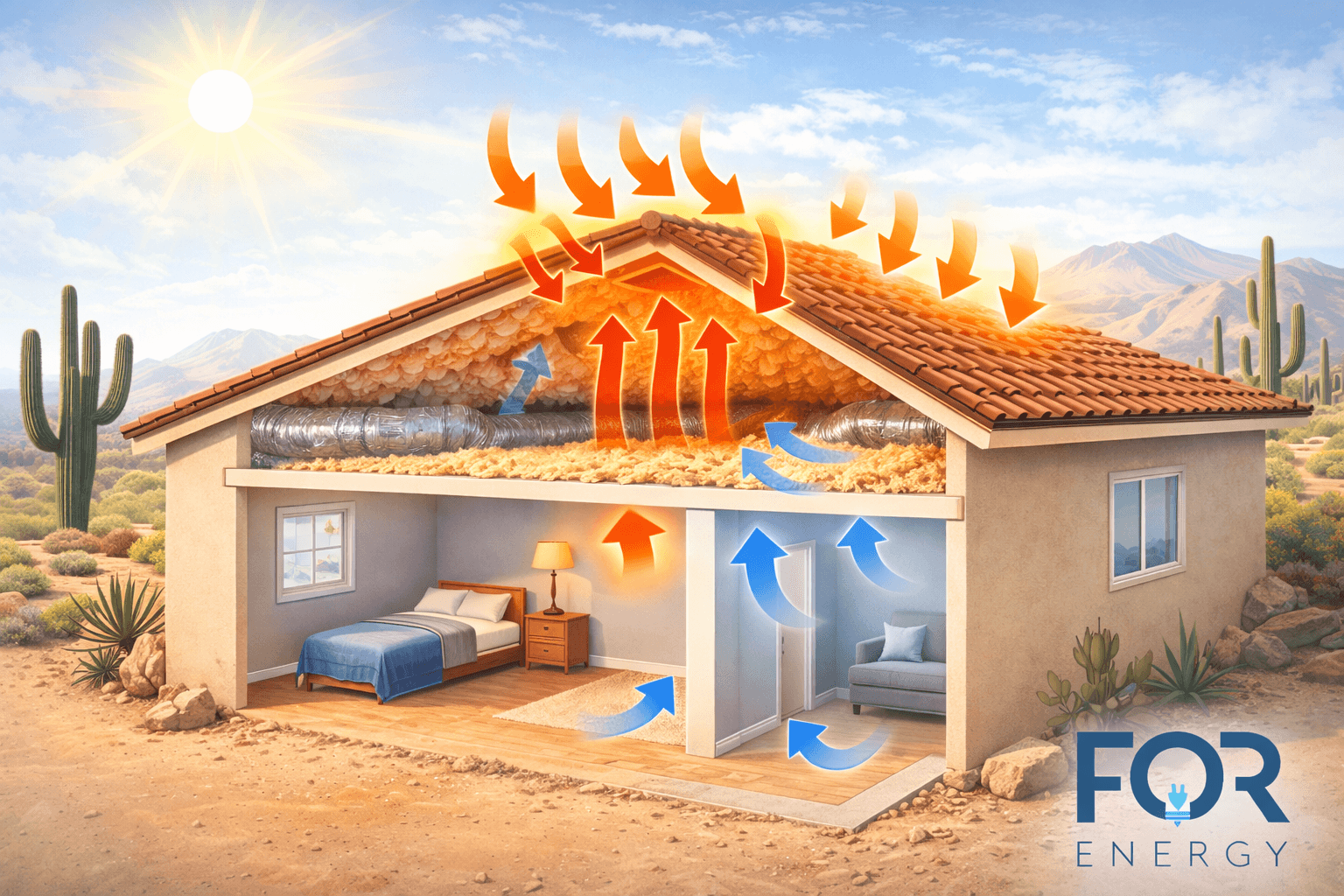
For Phoenix homeowners, the relentless summer sun isn't just a fact of life; it's a constant battle for your air conditioner. If you've noticed your cooling costs climbing year after year, the culprit might not be your HVAC unit, but what’s hidden in your attic. Old, degraded insulation is one of the primary reasons for high electricity bills and inconsistent home comfort. Over time, insulation loses its effectiveness through several common forms of degradation, such as settling, moisture damage from unseen roof leaks, and pest contamination. This breakdown leads to a significant loss of thermal resistance, allowing the oppressive desert heat to infiltrate your living spaces and forcing your AC to work overtime.
Essentially, inadequate insulation creates a superhighway for heat transfer. Even if your home was well-insulated decades ago, the materials used then are no match for modern standards or the wear and tear of time. This insulation degradation means you're paying to cool the attic, not just your home, a costly symptom of a fixable root cause.
Understanding R-Value Loss in Aged Insulation
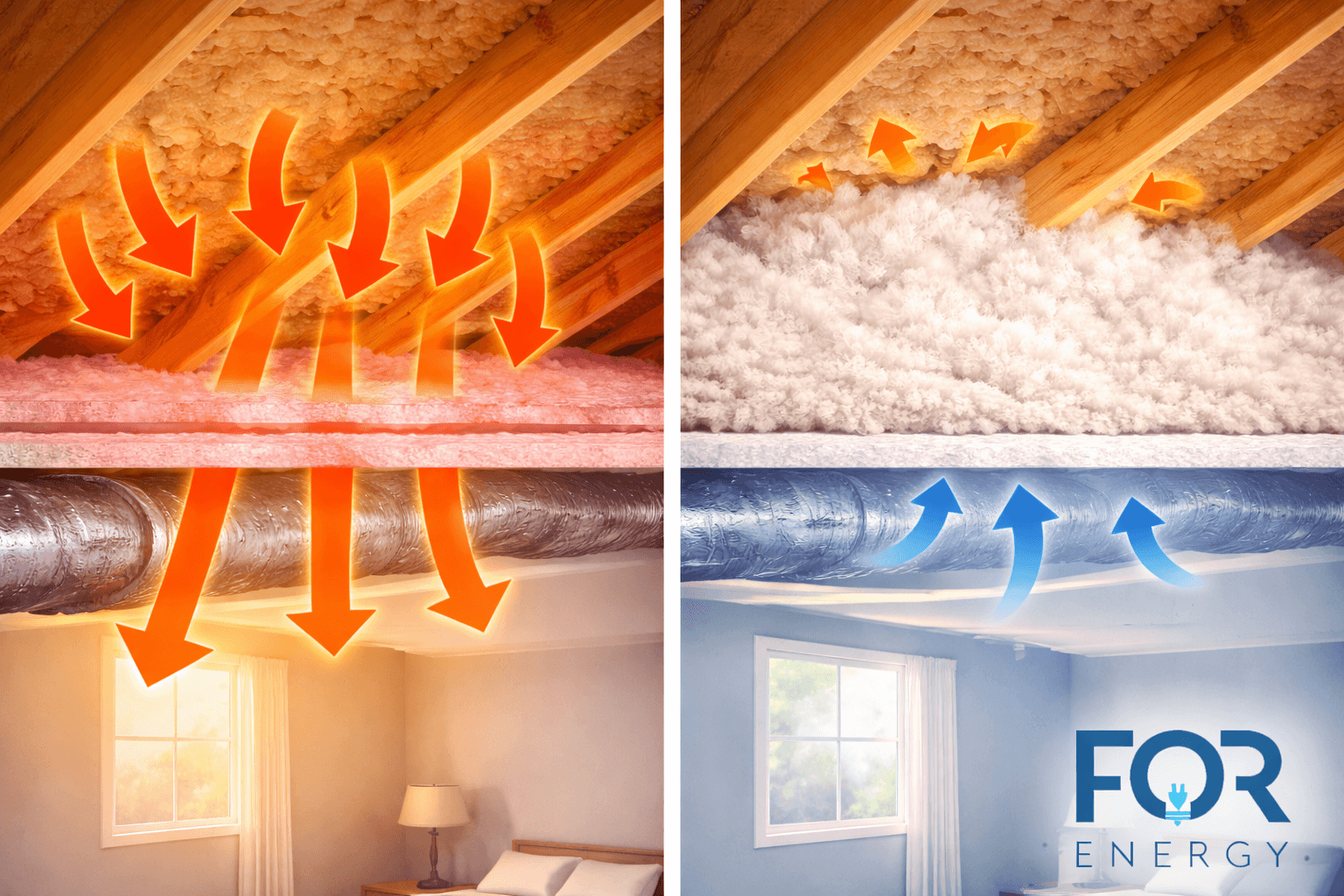
Every insulation material is rated by its "R-value," which measures its ability to resist heat flow. The higher the R-value, the more effective the insulation is at keeping your home cool in the summer and warm in the winter. However, this value is not permanent. When insulation, particularly older blown-in or batt types, settles and compresses, its thickness decreases, and so does its R-value. Moisture saturation from a humid attic or a minor leak can have a devastating effect, rendering fiberglass or cellulose insulation nearly useless. This loss of R-value directly compromises your home's thermal barrier, making it significantly less energy efficient. It's a gradual decline that often goes unnoticed until the utility bills become too high to ignore.
Quantifying Your Potential Energy Savings in Phoenix
Replacing old and ineffective insulation isn't just an expense; it's a strategic investment in your home's energy efficiency with a clear and often substantial return. According to the U.S. Environmental Protection Agency (EPA), homeowners can save an average of 15% on heating and cooling costs simply by air sealing and adding proper insulation. For residents in the Phoenix metro area, where cooling accounts for a massive portion of the annual electricity bill, the savings can be even more dramatic. Many Arizona homeowners see a reduction of 30-50% in their cooling costs during the peak summer months after a comprehensive insulation upgrade.
Imagine cutting your July and August SRP or APS bills by a third or even half. For a typical Phoenix household, this can translate into hundreds, if not thousands, of dollars in annual savings. These aren't just abstract figures; they represent tangible relief from the financial pressure of Arizona's extreme heat. The primary reason for such significant savings is that new, high-performance insulation drastically reduces your HVAC system's runtime. Instead of constantly cycling on to fight off heat gain, your system can maintain a comfortable temperature with much less effort and electricity consumption. You can learn more about where homes lose the most energy on our blog.
Phoenix-Specific Impact: Beating the Desert Heat
In a climate where attic temperatures can soar above 150°F, attic insulation is the single most critical line of defense against solar heat gain. The intense Arizona sun beats down on your roof, radiating heat downward into your attic and, subsequently, your living space. Effective attic insulation acts as a robust barrier, slowing this heat transfer to a crawl. By preventing this heat intrusion, your air conditioner doesn't have to work nearly as hard to keep your home cool. Upgrading from old, settled insulation with a low R-value to modern materials that meet or exceed current codes for our climate zone is one of the most effective ways Arizona homeowners can improve energy efficiency and directly reduce their high electricity bills.
Factors Influencing Your Energy Savings
While the potential for savings is significant, the exact amount you'll save by replacing old insulation depends on several key factors. The size of your home, its architectural style, and the existing condition of your insulation all play a role. A larger home naturally has more surface area to insulate, leading to greater potential savings. The type of insulation being replaced and the new material being installed also have a major impact.
Perhaps the most crucial factor, often overlooked, is air leakage. Insulation and air sealing are two sides of the same coin; they work together to maximize your home's efficiency. As noted by the Department of Energy, sealing leaks prevents conditioned air from escaping and unconditioned air from entering. Without proper air sealing before attic insulation, even the best insulation will underperform as hot attic air is pulled into the living space through gaps and cracks. A whole-home approach that addresses both thermal resistance and air infiltration is essential for achieving the highest possible energy savings.
The Process: From Old to New Insulation for Maximum Efficiency
Achieving maximum efficiency starts with understanding that you can't just put new insulation on top of old, compromised material. The process begins with professional insulation removal, a critical step that ensures a clean slate. Removing degraded, dusty, or pest-contaminated insulation eliminates potential indoor air quality issues and allows for proper air sealing of the attic floor.
Once the old material is gone and the area is properly prepped, new, high-performance home insulation is installed. For Phoenix's hot climate, materials like blown-in fiberglass, cellulose, and spray foam are highly effective choices. These options create a seamless thermal blanket that fills gaps and corners, providing superior coverage compared to older materials. A professional installation ensures the insulation achieves its full, rated R-value, which is essential for blocking the intense radiant heat that dominates our climate. This careful, methodical approach fixes the root cause of energy loss, rather than just treating a symptom.

Beyond Savings: Enhanced Comfort and Home Performance
The benefits of upgrading your insulation extend far beyond just a lower electricity bill. One of the most immediate advantages homeowners notice is a dramatic improvement in indoor comfort. New insulation helps maintain a consistent temperature throughout the entire house, eliminating those frustrating hot spots and cold rooms. Your home feels more stable and pleasant, regardless of the scorching temperatures outside.
Furthermore, a well-insulated and sealed home contributes to better indoor air quality. By reducing drafts and air leakage from dusty attics or crawlspaces, you limit the number of allergens, dust, and pollutants that enter your living environment. This can be especially beneficial for family members with allergies or respiratory sensitivities. Finally, by reducing the overall cooling demand, you lessen the daily strain on your HVAC system. This can lead to fewer breakdowns and a longer lifespan for one of the most expensive appliances in your home. Proper insulation can even improve the performance of your ductwork by keeping the surrounding attic space cooler, a benefit that can be enhanced with services like duct sealing.
Take the Next Step: Your Free Home Energy Checkup
Reading about the benefits of new insulation is one thing, but seeing how it can apply to your specific home is another. The best way to understand your home's unique needs and uncover your true potential for energy savings is with a professional assessment. We invite you to take the next step and schedule a complimentary home energy checkup.
Our comprehensive home energy audit provides a top-to-bottom analysis of your home's performance. A FOR Energy expert will assess your current insulation levels, identify critical air leaks, and provide you with a clear, data-driven report. This no-obligation checkup empowers you with the knowledge needed to make informed decisions, ensuring that any upgrades are tailored for maximum impact on your comfort and your wallet. Stop guessing why your bills are so high and let us help you find the solution.
FAQs
How much money can I typically save on my electricity bill in Phoenix after replacing old insulation?
Homeowners in Phoenix can see significant savings, with estimates suggesting an average of 15% on heating and cooling costs, and potentially 30-50% on cooling bills specifically during the long summer season, translating to hundreds of dollars annually.
What causes old insulation to become ineffective and lose its energy-saving properties?
Over time, insulation can degrade due to settling, which reduces its thickness and R-value; moisture damage from leaks or humidity; and contamination from pests or dust, all of which compromise its ability to resist heat transfer.
What types of insulation are best suited for maximum energy savings in the intense Phoenix heat?
In Phoenix's hot climate, high-performance options like blown-in fiberglass, cellulose, spray foam, and radiant barriers are highly effective at resisting and reflecting heat transfer, especially in attics.
Does replacing insulation also improve home comfort beyond just saving energy?
Yes, upgraded insulation significantly improves indoor comfort by maintaining more consistent temperatures, eliminating hot and cold spots, reducing drafts, and even enhancing indoor air quality by limiting outside pollutants.
What are the first steps to determine if my old insulation needs to be replaced in my Phoenix home?
The best first step is to schedule a professional home energy checkup. An expert can assess your current insulation's condition, identify air leaks, and provide data-driven recommendations tailored to your home's specific needs in the Phoenix metro area.