-400x299.png&w=1080&q=75&dpl=dpl_Hi6ZKV3Miso167J9igyQX1ihqdht)
AeroSeal vs. Manual Duct Sealing: Which is More Energy-Efficient for Phoenix Homes?
Key Takeaways
Leaky ducts in Phoenix homes can waste 20-30% of conditioned air, leading to higher energy bills and reduced comfort, especially during extreme heat.
Manual duct sealing addresses visible, accessible leaks with mastic or tape but often misses hidden or hard-to-reach areas.
AeroSeal technology seals ducts from the inside using an aerosolized polymer that reaches all leaks up to ⅝ inch and typically reduces leakage by up to 90%.
AeroSeal provides measurable, data-backed results, ensuring comprehensive sealing and significant, long-term energy savings for Phoenix homeowners.
Choosing the right duct sealing method directly impacts HVAC efficiency, indoor air quality, home comfort, and the lifespan of your cooling system in Arizona's demanding climate.
In the relentless heat of a Phoenix summer, your air conditioning system is more than a luxury; it's a necessity. But what if up to 30% of the cool air it produces never even reaches your living spaces? This is the reality for countless homeowners with leaky ductwork. The conditioned air you pay for escapes into the attic, crawlspace, or walls, forcing your HVAC unit to work harder, longer, and less efficiently. The solution is effective duct sealing, but not all methods are created equal. This guide compares the traditional manual sealing approach with the advanced, technology-driven AeroSeal solution to help you decide which is truly more energy-efficient for your Phoenix home.
The Hidden Problem: Why Duct Leakage Costs Phoenix Homeowners
Duct leakage is one of the most significant, yet often overlooked, sources of energy waste in a home. Your duct system is a network of pathways designed to deliver conditioned air efficiently to every room. When this network has gaps, cracks, and poorly connected joints, a substantial portion of that air is lost. This forces your HVAC system into overdrive to compensate, leading to a cascade of problems, including higher energy bills, reduced comfort, and unnecessary strain on your equipment. If you're wondering where do homes lose most energy, the unseen network of ducts above your head is a primary culprit.
Understanding Energy Loss in the Arizona Climate
In the Phoenix metro area, the consequences of duct leakage are magnified. When summer temperatures soar past 110°F, your attic can reach a scorching 150°F or more. Leaky supply ducts in this superheated space not only lose precious cooled air but can also draw in hot, dusty attic air, contaminating your indoor environment. It's estimated that the average home loses 20-30% of its conditioned air to these leaks. This means that for every dollar you spend on cooling, up to 30 cents could be wasted conditioning your attic rather than your living room. This inefficiency doesn't just inflate your electricity bill; it puts immense strain on your air conditioner, potentially shortening its lifespan.
Signs Your Ducts Are Leaking
Identifying leaky ducts can be tricky since they are mostly hidden from view. However, there are several common red flags that Phoenix homeowners should watch for:
High Energy Bills: A sudden or consistently high electricity bill that can't be explained by rate hikes or extreme weather is a primary indicator.
Uneven Temperatures: Do some rooms feel stuffy and warm while others are comfortable? This is often caused by poor airflow resulting from leaks.
Excessive Dust: If you find yourself dusting more frequently, it could be because your return ducts are pulling in dusty air from the attic or crawlspace and distributing it throughout your home.
HVAC System Runs Constantly: An AC unit that struggles to reach the thermostat setting and cycles on and off constantly is a clear sign it's working too hard, often due to significant air loss.
If these symptoms sound familiar, a professional home energy audit can pinpoint the source of the problem and quantify the extent of your duct leakage.
Manual Duct Sealing: The Traditional Approach
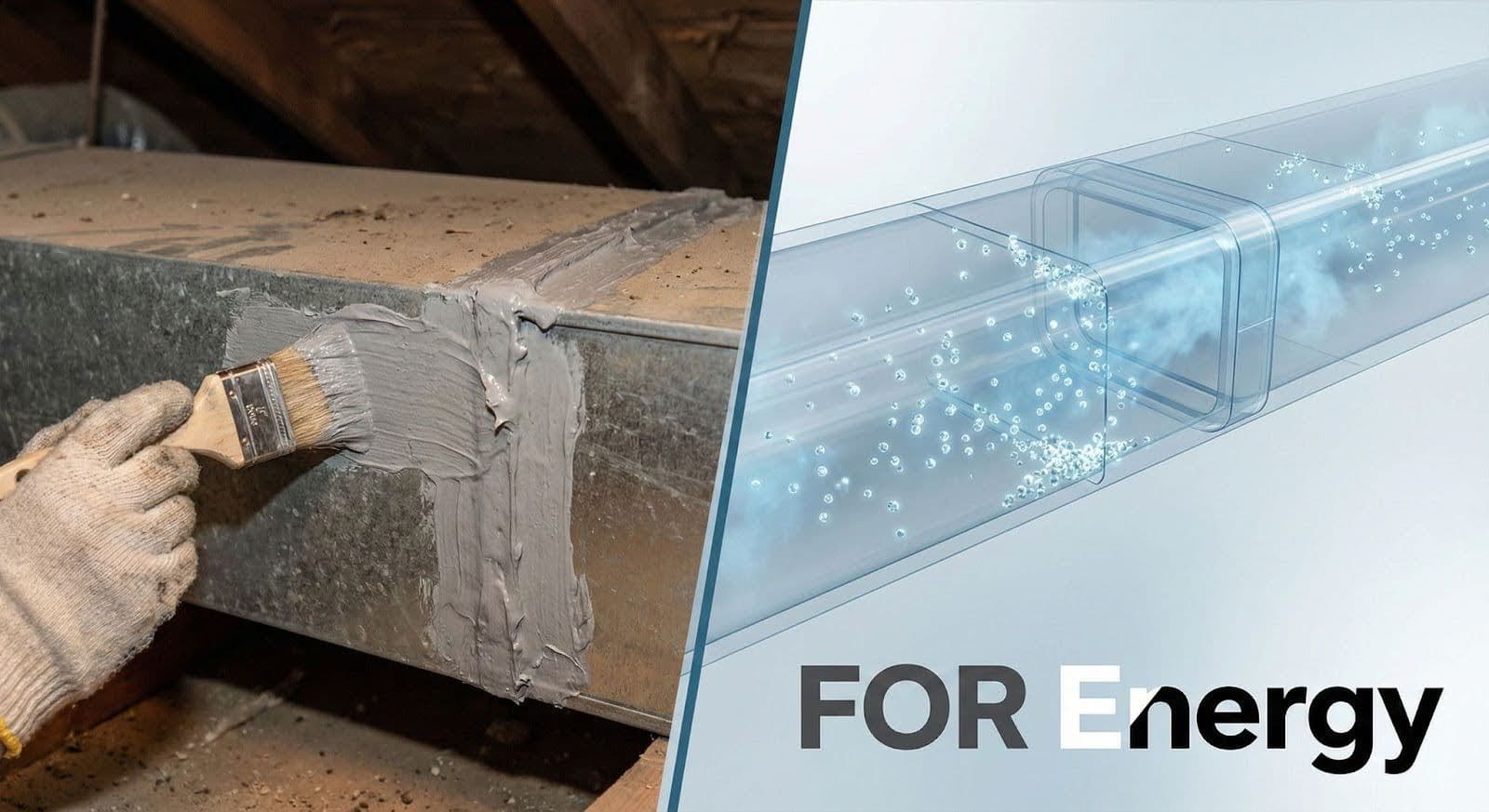
For years, the standard method for addressing duct leakage has been manual sealing. This hands-on process involves a technician physically inspecting the ductwork and applying sealant to any visible, accessible leaks, cracks, and connections. It's a targeted approach that can be effective for obvious problems but has significant limitations, given what a person can see and reach.
Methods and Materials of Manual Sealing
The two most common materials used for manual sealing are mastic sealant and specialized foil tape. Mastic is a gooey, paint-on substance that dries into a hard, durable shell, creating a robust seal over joints and seams. It's considered the more reliable of the two materials. Foil tape, specifically UL 181-rated tape, is a high-performance adhesive tape designed for HVAC applications. It's important to note that common cloth-backed duct tape should never be used, as it degrades quickly under the extreme temperature fluctuations in an attic.
Limitations of the Manual Method
The fundamental weakness of manual sealing is its reliance on accessibility. Much of a home’s ductwork is hidden behind walls, under insulation, or in tight, hard-to-reach corners of an attic. Technicians can only seal what they can see. This means countless small leaks, disconnected boot registers, and tiny cracks throughout the system are often missed. While sealing the major, visible leaks can provide some benefit, it's an incomplete solution that leaves significant potential for energy loss unaddressed.
AeroSeal Duct Sealing: The Advanced, Measurable Solution
In contrast to the limitations of manual methods, AeroSeal duct sealing offers a comprehensive, technology-driven solution that seals the entire duct system from the inside out. Developed at Lawrence Berkeley National Laboratory, this innovative process targets leaks that are physically impossible to reach by hand, ensuring a virtually airtight system with data-backed results. It’s a whole-home solution designed for maximum impact.
How AeroSeal Works: Precision from the Inside Out
The AeroSeal process is methodical and precise. First, all vents and registers are blocked off, and the duct system is pressurized with a fan. A specialized computer system measures airflow and calculates the exact amount of leakage in real time. This provides a clear baseline before any sealing begins.
Next, a non-toxic, aerosolized polymer sealant is injected into the pressurized ducts. These microscopic particles remain suspended in the air stream, traveling through the ductwork until they reach a leak. As the air escapes through a crack or hole, the sealant particles stick to the edges, building up layer by layer until the leak is completely sealed. The computer monitors this process, providing a live graph that shows the leakage rate dropping until the desired level of airtightness is achieved.
Measurable Results and Lasting Durability
The greatest advantage of AeroSeal is its quantifiable success. You don't have to wonder if it worked; you get a certified report showing the "before" and "after" leakage rates. This technology is so effective that it can reduce duct leakage by up to 90%, sealing cracks up to ⅝ of an inch wide. The water-based sealant is safe, has low VOCs, and is incredibly durable, coming with a 10-year warranty and a tested lifespan of up to 40 years. This ensures long-term performance and peace of mind.
Energy Efficiency Showdown: AeroSeal's Advantage in Phoenix
When comparing AeroSeal to manual sealing, the difference in energy efficiency is stark, especially in a demanding climate like Phoenix's. Manual sealing is a partial fix at best, while AeroSeal provides a comprehensive, whole-system solution.
Superior Leakage Reduction and Energy Savings
Because AeroSeal seals the entire duct system, not just the visible parts, it stops significantly more air loss. This comprehensive seal means your HVAC system can deliver conditioned air far more efficiently, often resulting in energy savings of 20-40% on heating and cooling costs. While manual sealing might help, it simply cannot achieve the level of airtightness and corresponding energy savings that AeroSeal’s technology guarantees.
Enhanced Comfort and HVAC Lifespan in Extreme Heat
The benefits of AeroSeal extend beyond your electricity bill. Ensuring proper airflow in every room eliminates hot and cold spots, creating a more consistent, comfortable indoor environment. It also improves indoor air quality by preventing dust, insulation fibers, and other attic pollutants from being pulled into your airstream. Furthermore, by reducing the system's workload, AeroSeal lessens the strain on your AC unit. This reduced runtime not only saves energy but can significantly extend the lifespan of your expensive HVAC equipment, a critical advantage during punishing Phoenix summers.
Making the Right Choice for Your Phoenix Home
For Phoenix homeowners, controlling cooling costs and maintaining home comfort are top priorities. While manual duct sealing can address the most obvious leaks, it's an incomplete solution that leaves significant energy savings on the table. AeroSeal technology offers a scientifically proven, measurable, and far more effective method to combat duct leakage. It is a comprehensive solution that addresses the root of the problem, ensuring your HVAC system operates at peak efficiency.
By investing in a complete seal with AeroSeal, you aren't just patching a problem; you're making a long-term improvement to your home's performance. You’ll enjoy lower energy bills, more consistent temperatures, better air quality, and a longer life for your AC system. To truly understand your home's needs, consider starting with a home energy checkup. For more tips for a more energy-efficient home or to see if AeroSeal is the right fit for you, schedule your complimentary consultation with the experts at FOR Energy today.
FAQs
How much energy can AeroSeal save me in Phoenix?
AeroSeal can typically reduce duct leakage by up to 90%, leading to average energy savings of 20-30% on heating and cooling costs for Phoenix homeowners. These savings are particularly significant in Arizona's extreme climate, where HVAC systems work harder.
What is the main difference between AeroSeal and manual duct sealing?
Manual duct sealing involves physically patching visible and accessible leaks with mastic or tape. AeroSeal, however, seals ducts from the inside using an aerosolized polymer mist, effectively reaching and sealing hidden or inaccessible leaks throughout the entire duct system, with measurable results.
How long does AeroSeal last?
AeroSeal comes with a 10-year warranty, but strength tests have shown that the seals can last up to 40 years, providing a long-term solution for duct leakage.
Will AeroSeal improve my home's indoor air quality in Phoenix?
Yes, by sealing leaks, AeroSeal prevents dust, allergens, and pollutants from entering your ductwork from unconditioned spaces (like attics) and circulating into your living areas. This can significantly improve indoor air quality and reduce potential health issues, which is especially beneficial in Phoenix's dusty desert environment.
Is AeroSeal safe for my family and pets?
Yes, the AeroSeal sealant is a non-toxic, water-based vinyl acetate polymer, which is safe for residential use. It has low volatile organic compounds (VOCs) and has passed safety standards, ensuring it won't harm occupants or the environment.